

Do teeth need to be shaved for crowns? Usually, yes. Veneers may need less preparation, but enamel removed from any tooth cannot regenerate after the procedure.
A crown covers the visible part of a tooth all the way around. A veneer mainly covers its front surface. Because these restorations work differently, their preparation requirements should not be described as though they were the same treatment. Some selected veneer cases need no mechanical reduction, but that does not make every veneer reversible.
This article explains why teeth are prepared, what can and cannot be reversed, and which alternatives may be considered. The information on the Dental Prime website supports discussion with a dentist; it does not replace an examination or an individual treatment plan.
Why Are Teeth Shaved Before Crowns or Veneers?
Teeth are prepared to make room for the thickness of the planned restoration. Without enough space, a crown or veneer could look bulky, interfere with the bite, or have an unsuitable contour near the gum. The aim is to create the required space while preserving sound tooth structure wherever possible.
Dentists may call this preparation, reduction, reshaping, or shaving. These terms describe removing tissue from particular surfaces of a tooth. They do not mean taking the tooth out of its socket. The natural tooth usually remains in place underneath the restoration.
However, needing space for a crown does not mean that every healthy tooth should receive one. A tooth with substantial damage and a healthy tooth with an unwanted colour have different needs. The reason for treatment must be established before deciding how much preparation is appropriate.
The assessment includes existing fillings, decay, cracks, gum health and the way the teeth meet. Imaging may be used when clinically indicated. The dentist should explain the expected benefit, the permanent changes involved and whether a less invasive option could address the same problem.
How Much Tooth Is Removed for Different Types of Restorations?

Illustrative image created with artificial intelligence.
The amount of tooth removed depends on the restoration, its material and the tooth being treated. There is no single measurement that applies to every tooth or every surface. Existing damage, tooth position and the space available in the bite all influence the plan.
Tooth Preparation for Zirconia and Porcelain Crowns
Full crowns normally require reduction around the tooth and across its biting surface. They need room to surround the remaining structure without making the restored tooth too large. This is generally more extensive than preparation confined mainly to the front surface for a veneer.
Zirconia describes a ceramic material, not a preparation-free technique. Different crown designs also have different requirements. A single-piece ceramic crown and a restoration with additional porcelain layers may need different amounts of space. The dentist considers the planned design and the forces it must withstand.
Existing decay and large fillings affect the assessment as well. Not everything removed during treatment is healthy enamel: damaged tissue or unsuitable old restorative material may also need to be removed. The remaining natural tooth is evaluated before the final design is chosen.
The zirconia crowns guide, available in Turkish, describes this treatment category. The preparation required for an individual tooth can only be decided after a clinical assessment.
Enamel Reduction for Porcelain Veneers
Porcelain veneers usually involve preparation on the front of the tooth, sometimes including the biting edge. The intention is to leave a suitable bonding surface while creating enough room for the ceramic. Preserving enamel is an important part of planning.
A small tooth positioned slightly inward and a prominent tooth do not necessarily need the same approach. Significant discolouration can also influence the thickness needed to mask the underlying shade. Published example measurements should not be treated as a prescription for an individual patient.
Even a small reduction permanently changes the tooth if tissue is removed. The words “thin veneer” or “minimal preparation” do not prove that treatment can be undone. Ask which surfaces will be altered and what the tooth would need if the restoration were later removed.
Can a Tooth Return to Its Original Shape After Crown Preparation?
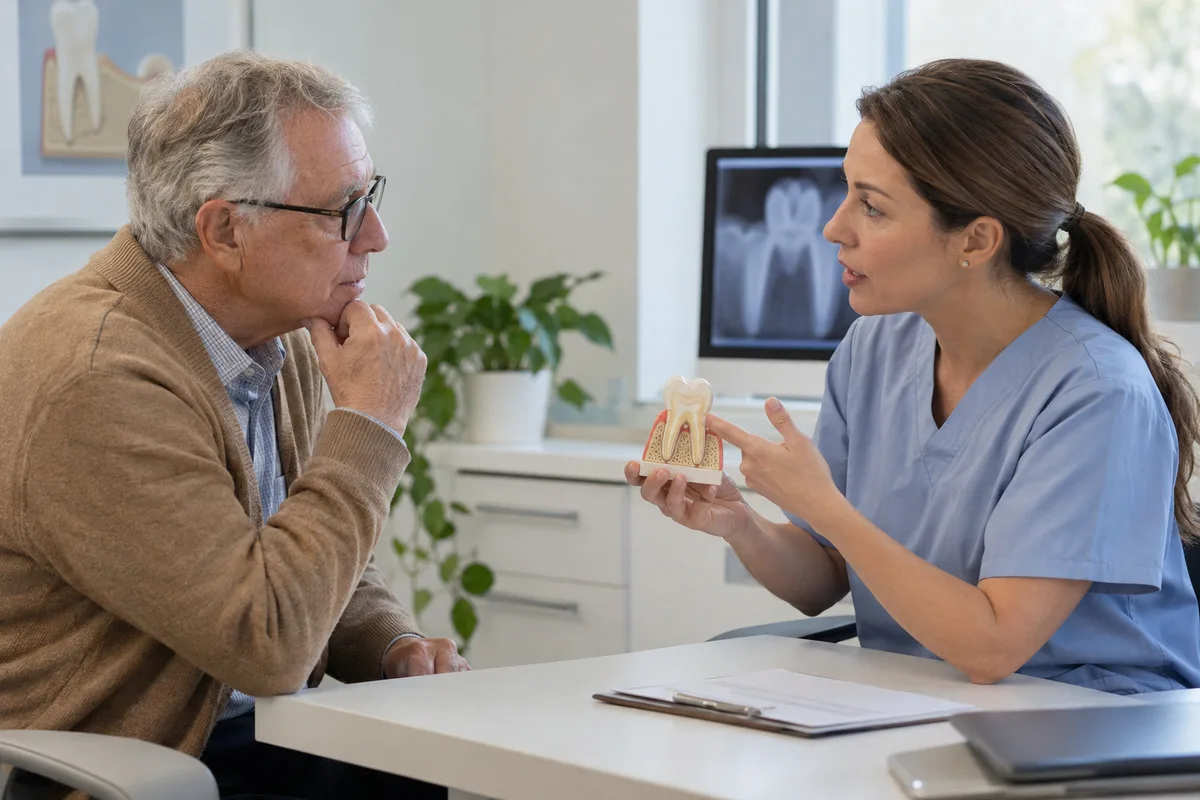
Illustrative image created with artificial intelligence.
A prepared tooth does not grow back to its previous size once tissue has been removed. A restoration can be repaired or replaced, but that does not recreate the natural enamel or other tooth structure that was taken away. This distinction matters before treatment begins.
The question is therefore more than whether a dentist can remove a crown. It is also what the remaining tooth will need afterwards to stay protected and function comfortably. That depends on its original condition and the preparation already carried out.
Does Removed Tooth Enamel Grow Back?
Removed tooth enamel does not grow back. Enamel is the hard outer layer of the tooth, and the body does not rebuild a mechanically removed section to its original thickness. This remains true even when the reduction is relatively small.
Early mineral loss is a different issue. Remineralisation can help repair early changes in enamel under suitable conditions, but it cannot rebuild the missing shape of a tooth that has been prepared for a restoration. Confusing these processes can create an unrealistic expectation of reversibility.
Removing a Restoration Is Not the Same as Reversing Treatment
Removing a restoration and reversing preparation are different actions. A dentist can remove, repair or replace the material covering a tooth. The natural structure removed during preparation cannot simply be put back afterwards.
For example, taking off a full crown leaves the prepared tooth underneath. That tooth may still need a replacement restoration for protection and function. The next restoration is selected according to the remaining structure, not simply by repeating the original procedure.
Can You Have Veneers Without Shaving Your Teeth?

Illustrative image created with artificial intelligence.
Veneers without mechanical tooth reduction may be suitable in selected cases. This approach is different from preparing a tooth for a full crown. The label “no-prep” does not mean that every patient is suitable or that future removal will always leave the tooth untouched.
The dentist needs to assess whether adding material to the existing tooth would create an acceptable shape. Too much bulk can affect cleaning and the relationship between the restoration and the gum. Avoiding preparation should not come at the expense of an unsuitable contour.
Who May Be Suitable for No-Prep Veneers?
No-prep veneers may be considered where a small increase in tooth volume is appropriate. Examples can include certain small teeth, selected spaces between teeth, or teeth positioned slightly inward. Adequate healthy bonding surfaces and a suitable bite are also important.
A tooth that already projects forward may become excessively prominent if more material is added. Marked crowding, extensive existing restorations, decay or gum disease can change the options. Existing oral health problems should be addressed before elective restorative treatment is planned.
Clenching or grinding also needs consideration. Suitability cannot be decided solely from a photograph or from how thin a veneer is. The dentist assesses the tooth, its supporting tissues and the forces acting on the proposed restoration together.
Minimal Preparation Versus No Preparation
Minimal preparation means that some tissue is removed, even if the amount is small. A genuinely preparation-free plan does not include mechanical reduction to create space. Those descriptions should not be used interchangeably when treatment is explained.
Bonding and eventual removal still need separate consideration. A restoration that was placed without initial shaving should not automatically be described as completely reversible. How the bonded material could later be removed also matters when assessing possible effects on the natural surface.
If a plan is described as no-prep, ask whether that applies to every tooth and every surface involved. Any proposed change should be explained before the preparation starts. Understanding the actual procedure is more useful than relying on the name alone.
Does Tooth Preparation Cause Pain or Sensitivity?
Tooth preparation can cause discomfort or sensitivity, although local anaesthesia is used when appropriate to control discomfort during the procedure. Symptoms afterwards vary with the tooth's condition, the preparation involved and the fit of the temporary or final restoration.
Short-lived sensitivity to hot or cold may occur. When needed, a temporary restoration helps protect the prepared tooth while the final restoration is being made. Follow the individual instructions provided about cleaning, eating and care during this period.
Pain that increases, starts spontaneously or wakes you at night needs assessment. Marked pain when biting, swelling or a temporary crown coming off should also be discussed with the treating dentist. Significant symptoms should not simply be dismissed as an adjustment period.
Sensitivity alone does not prove that root canal treatment is needed. The cause is investigated through examination and any appropriate tests. The bite, restoration margins and health of the pulp may all need checking before a decision is made.
What Alternatives to Crowns or Veneers Can Be Considered?
Alternatives depend on what needs to change. Discolouration, a small chip, a space between teeth and a positioning problem are different issues. A full crown is not automatically necessary for each of them.
Equally, a less invasive option is not always sufficient for a tooth with substantial structural damage. Treatment choices should be compared in terms of the problem they address, the tissue they preserve and their maintenance needs. Speed and appearance alone are incomplete criteria.
Reshaping Teeth with Composite Bonding
Composite bonding uses tooth-coloured restorative material added to the tooth and shaped as required. It may be considered for small chips, selected gaps and limited changes in shape. In suitable cases, little or no tooth reduction may be needed.
Composite can wear, stain, chip or need repair over time. Its limitations should be discussed alongside the amount of natural tissue that can be preserved. It is also inaccurate to describe every bonding procedure as fully reversible regardless of how the surface was prepared.
The composite veneers guide, available in Turkish, explains this category of additive treatment. Choosing between bonding and a full crown requires an assessment of the tooth and its remaining structure.
Teeth Whitening and Orthodontic Treatment
Teeth whitening addresses colour changes in suitable natural teeth. It does not replace missing tissue or repair a fracture. Existing fillings and crowns do not whiten in the same way as natural teeth, which needs consideration when planning colour changes.
Orthodontic treatment addresses tooth position and the bite. In some cases, improving alignment before restorative treatment can reduce the amount of reshaping later needed. An orthodontic assessment helps establish what is appropriate and how the stages might fit together.
More than one approach may be considered, but combining treatments should serve a clear clinical purpose. Cleaning between teeth, brushing and attending individually recommended reviews remain important whichever option is chosen. Restorations do not remove the need for ongoing oral care.
What Should You Ask Your Dentist Before Having Crowns or Veneers?

Illustrative image created with artificial intelligence.
Before agreeing to treatment, ask why it is recommended for each tooth and what permanent changes it involves. A material name or an attractive preview does not provide all the information needed to make an informed decision.
Useful questions include:
What finding makes a crown or veneer appropriate for this tooth?
Which surfaces will be reduced, and what sound tissue can be preserved?
Could bonding, whitening or orthodontic treatment address the same concern?
Will I need a temporary restoration, and how should I care for it?
What repairs, maintenance or replacement might be needed in the future?
What should I do if I am uncomfortable with the colour, shape or bite?
Ask what could happen if treatment is delayed or not carried out, too. If anything remains unclear, request further explanation before work begins. A second dental opinion can also help you understand the available choices.
When reviewing information about a dental clinic in Samsun, remember that online descriptions cannot determine whether your own teeth need preparation. That decision depends on a personal examination and discussion of the relevant findings.
Conclusion
Do teeth need to be shaved for crowns? Full crowns generally require preparation, while the amount needed for veneers varies and some selected cases may need no mechanical reduction. Removed tooth tissue does not grow back, and replacing a restoration does not restore the original natural tooth.
Before deciding, discuss the reason for treatment, the tissue that can be preserved and any suitable alternatives. A promise of minimal preparation or a short treatment schedule should not be the only basis for choosing. The plan should follow an assessment of the teeth, gums and bite.
This article provides general information, not a diagnosis or personal treatment recommendation. The images were created with artificial intelligence specifically for this article. They are illustrative and do not show real patients, clinicians, clinic premises or treatment outcomes.