Spec. Dt. Gökcan ErtaşOrthodontist
 Dt. Sena KırcaDentist
 Dt. Sevinç Cansu KayıranDentist
 Assoc. Prof. Dr. Sezin ÖzerPediatric Dentist
 Spec. Dt. Sude Yıldırım BolatSpecialist in Periodontology
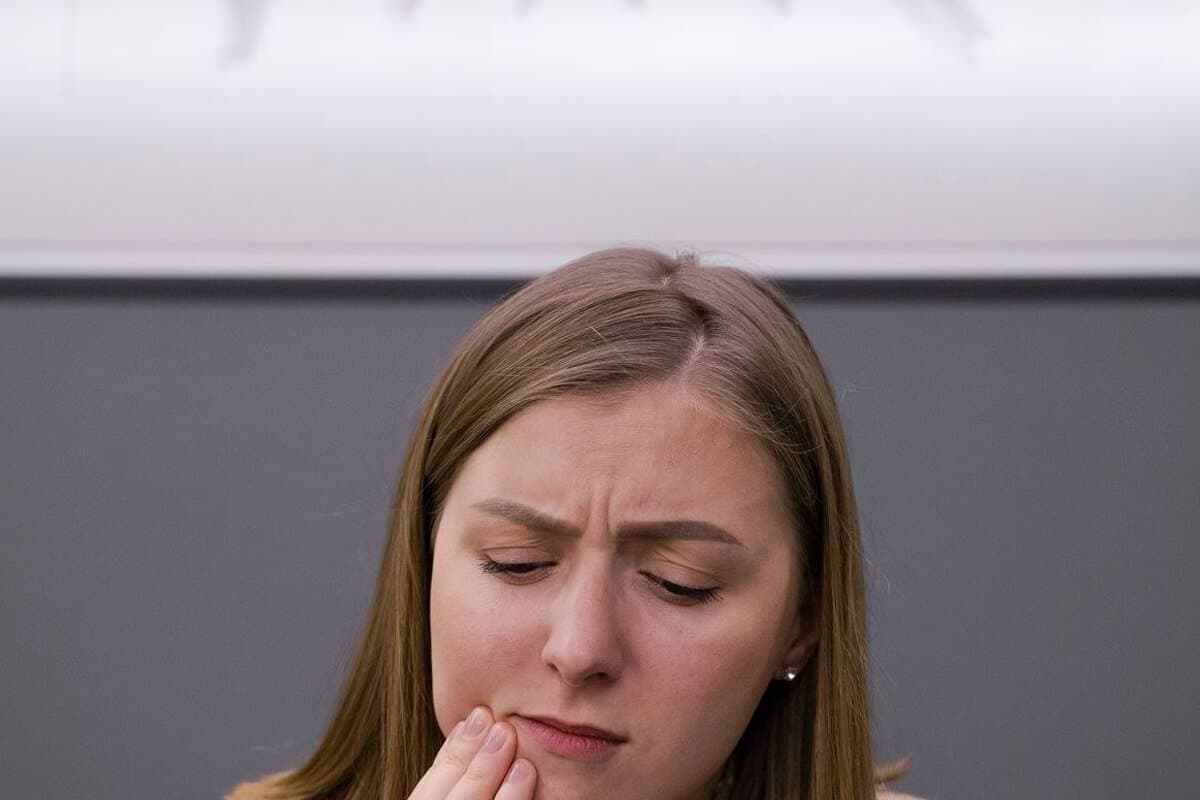
Teeth clenching, or bruxism by its medical name, is a condition in which the chewing muscles contract involuntarily and the teeth press tightly against each other without a functional purpose such as eating or speaking, usually during sleep or under intense stress. This parafunctional activity creates destructive pressure far above normal chewing force, leading to wear on tooth enamel, temporomandibular joint (TMJ) disorders and chronic head and neck pain. Directly related to the central nervous system and stress factors, this condition is a serious clinical picture that, when left untreated, can lead to tooth fractures, hypertrophy of the facial muscles and permanent joint damage that lowers quality of life.
What is teeth clenching (bruxism) and how does it happen?
In its simplest terms, bruxism is the involuntary operation of our chewing system with excessive force, outside its natural tasks such as eating or speaking. On a normal day, our teeth touch each other only while eating and swallowing. The total duration of this contact is measured in just minutes, and the force applied is at a level that does not harm the tissues. But when bruxism comes into play, everything changes.
During this process, the jaw muscles apply a force roughly two to three times that of normal chewing. Moreover, this force is not dynamic and variable as it is while eating, but takes an "isometric" form, in which the length of the muscle stays constant while tension peaks. We can compare this to the muscle tension you feel in the moment when you try to lift a very heavy barbell in the gym and cannot move it. Your teeth either lock and clench against each other (we call this "clenching") or are ground by rubbing against each other (we call this "grinding"). As a result, the entire system, from the jawbone to the tooth enamel, is placed under a load that pushes its biological limits.
What are the symptoms of teeth clenching and how can I check myself?
Your body actually sends you signals constantly, but in the rush of daily life we usually ignore these signals or attribute them to other causes. If you are not sure whether you clench your teeth, you should check whether you have the following symptoms when you wake up in the morning or during the day.
The most common symptoms of teeth clenching are:
Morning fatigue
Temple pain
Jaw locking
Tooth sensitivity
Facial asymmetry
Neck pain
Ringing in the ears
Tooth fractures
Among these symptoms, the heavy muscle fatigue felt in the cheeks in the morning is very characteristic. You wake up with a feeling as if you had been chewing gum all night. When we look inside the mouth, we see a white line (linea alba) on the inner side of your cheeks, along the level where your teeth meet. This is the clearest evidence that you have been suctioning or biting your cheeks between your teeth throughout the night.
Aesthetically, you may also notice changes in your face when you look in the mirror. The constantly and excessively working masseter muscle (the large chewing muscle in the lower part of the cheeks) gains volume and grows over time, just like the arm muscles of a bodybuilder. This is called "masseter hypertrophy," and it causes the lower part of your face to widen, your facial features to harden and a more square appearance to develop.
Why do I clench my teeth and what are the triggering factors?
I hear the question "Why me?" very often in the clinic. Unfortunately, the answer cannot be reduced to a single item, because bruxism is a multifactorial condition. However, at the very top of the list, without dispute, are "stress" and "psychosocial factors." The burdens of modern city life, work anxiety, suppressed anger, a perfectionist personality and even traffic stress are enough of a reason to make you clench your teeth at night. We observe that, especially during the pandemic and with the changing living conditions afterward, the rates of teeth clenching in society have risen significantly, and in some cases have tripled.
In addition, some medications you use and your lifestyle habits can also trigger this condition by stimulating the central nervous system.
The main factors that trigger teeth clenching are:
Stress
Anxiety
Smoking
Alcohol
Caffeine
Antidepressants
Sleep apnea
Snoring
Smoking in particular, because of the stimulating effect of nicotine, increases the risk of teeth clenching about 5 times compared with non-smokers. Similarly, the use of some antidepressants in the SSRI group can lead to bruxism as a side effect by affecting the chemical balance in the brain (dopamine-serotonin). In respiratory disorders such as sleep apnea, the body tenses the jaw muscles during its struggle to breathe. In other words, the problem sometimes appears not only in your teeth but in your jaw as a reflection of your general health.
Is it more harmful during sleep at night or while awake during the day?
Bruxism is divided into two types according to when it occurs, "Awake Bruxism" and "Sleep Bruxism," and the mechanism of each is different. Making this distinction is critical for us to plan the right treatment.
Awake bruxism usually occurs without the person being aware of it. When you focus on intense work at the computer, while driving in traffic or during a stressful phone call, you may notice that you are clenching your teeth. In this type there is usually no audible grinding; a static "clenching" movement is more prominent, and a pain spreading through the jaw area is felt during the day.
Sleep bruxism, on the other hand, is a much more complex and uncontrollable neurophysiological process. During sleep, short-lived episodes that we call "micro-arousals" occur in your brain and body. Even if the person does not wake up, the heart rate speeds up, brain waves change and the sympathetic nervous system (the body's alarm mechanism) kicks in. It is exactly at this moment that a powerful "contract" command goes to the jaw muscles. This happens outside of your will and is usually noticed by the grinding sound heard by partners. Because your consciousness is off, this clenching at night cannot be controlled, and the force applied can be far more destructive than during the day.
What are the harms of teeth clenching if left untreated?
Our patients sometimes think, "I'm already used to it, nothing will happen," but when left untreated, bruxism is a progressive process that causes damage in the chewing system that is difficult to reverse. We usually see the first damage in the teeth. The enamel tissue at the tips of the teeth wears down and flattens, the tooth height shortens and the yellow dentin layer underneath is exposed. This causes both aesthetic deterioration and sensitivity to hot and cold. In addition, wedge-shaped losses, which we call "abfraction," occur at the neck areas where the teeth meet the gums.
However, the greatest danger lies not in the teeth but in the jaw joint (the temporomandibular joint - TMJ).
The possible consequences of long-term teeth clenching are:
Tooth wear
Enamel cracks
Filling fractures
Gum recession
Joint degeneration
Disc displacement
Limited mouth opening
Chronic headache
The jaw joint is one of the most complex working mechanisms of the body. Excessive pressure lasting throughout the night can cause the disc, which acts as a cushion inside the joint, to slip out of place. In this case, "click" or "clicking" sounds begin to come from in front of the ear while eating. In advanced stages, this can go as far as locking of the jaw and being unable to open the mouth fully. In addition, chronic spasm in the jaw muscles also affects the neck and back muscles, paving the way for postural problems and persistent migraine-like headaches.
Do night guards (occlusal splints) really work?
Among the most frequently used and proven methods in the treatment of teeth clenching are occlusal splints, known in everyday language as night guards. However, we need to make a very important distinction here. The guards we are talking about are not the soft silicone protectors that you buy at the pharmacy and soften in hot water or order online. In fact, soft guards often make the situation even worse; because when there is a soft material in your mouth, the brain perceives it as "food to be chewed," and you may end up clenching more, as if chewing gum.
The splints we use in treatment are biomechanical appliances made of hard acrylic, prepared in the laboratory with custom measurements and adapted to the millimeter by the dentist.
The benefits provided by these professional guards are:
Protecting the teeth
Relaxing the muscles
Easing the joint
Reducing pain
The main purpose of splint treatment is not just to prevent the teeth from rubbing against each other. Our real goal is the process we call "deprogramming." That is, by breaking the contact of your teeth with each other, we try to make the brain forget the "clench" command it sends to the muscles and to erase muscle memory. The splint puts the jaw in an ideal position, allowing the muscles to lengthen and relax. In particular, designs we call "stabilization splints," when used regularly, significantly reduce activity in the masseter muscle. In patients with joint problems, we use different designs to seat the jaw joint (condyle) in place.
Is teeth-clenching Botox (Masseter Botox) a definitive solution?
With advances in technology and our medical knowledge in recent years, one of the most powerful tools we have in the treatment of teeth clenching has become Botulinum Toxin, that is, Botox applications. Once known only for aesthetic purposes, this application is now an indispensable part of treatment protocols in dentistry. Botox works by temporarily blocking the "contract" signal that travels from the nerve endings to the muscles.
Our aim here is not to completely paralyze the muscle or end its function. Our goal is to bring the destructive, pathological force produced by the muscle, which has risen to 2-3 times, back to "physiological," that is, normal limits. Scientific studies and especially biomechanical analyses clearly demonstrate the protective effect of Botox on joint health.
The advantages of Botox application are:
Reducing muscle force
Lowering joint stress
Slimming the face
Protecting the teeth
Combined applications made to the masseter muscle (cheek) and, when necessary, the temporal muscle (temple) in particular can reduce the load on the jaw joint by 25% to 40%. This is an enormous rate for protecting the joint disc and the bone structures. The procedure takes only a few minutes and its effect lasts about 4 to 6 months. During this time the muscles get a chance to "rest," muscle memory weakens, and the overgrown muscle volume shrinks, giving the face a slimmer, more aesthetic appearance. Botox is an excellent option, especially for our patients who cannot use a guard or whose pain continues despite a guard.
What can I do at home and what should I pay attention to?
The treatment process always begins in the clinic but continues at home. Since the root of bruxism lies in stress and nervous system dysregulation, the small changes you make in your lifestyle greatly affect the success of treatment. Adopting a holistic approach will protect not only your teeth but also your overall quality of life.
First of all, "awareness" is very important. Check on yourself often during the day. Even when your lips are closed, your teeth should not touch each other. Remind yourself of the principle "lips together, teeth apart."
Simple measures you can take at home are:
Reducing caffeine
Limiting alcohol
Not chewing gum
Applying a warm towel
Massage
Choosing a pillow
Sleep hygiene
Vitamin D supplementation
In your eating habits, limiting caffeine and alcohol consumption, especially in the evening hours, helps your nervous system calm down. Habits such as chewing gum or biting pens should be strictly avoided, since they make your already tired jaw muscles work overtime. In addition, recent scientific data show that vitamin D deficiency and inadequate calcium intake may be associated with sleep bruxism; for this reason, it is worth having your blood values checked.
Paying attention to sleep hygiene, keeping the bedroom dark and quiet, and cutting off exposure to blue light (phone) before bed can improve your sleep quality and ease clenching episodes. During painful periods, applying a compress with a damp warm towel to your jaw area and massaging it gently also increases blood circulation in the muscles and provides relief.