Spec. Dt. Gökcan ErtaşOrthodontist
 Dt. Sena KırcaDentist
 Dt. Sevinç Cansu KayıranDentist
 Assoc. Prof. Dr. Sezin ÖzerPediatric Dentist
 Spec. Dt. Sude Yıldırım BolatSpecialist in Periodontology
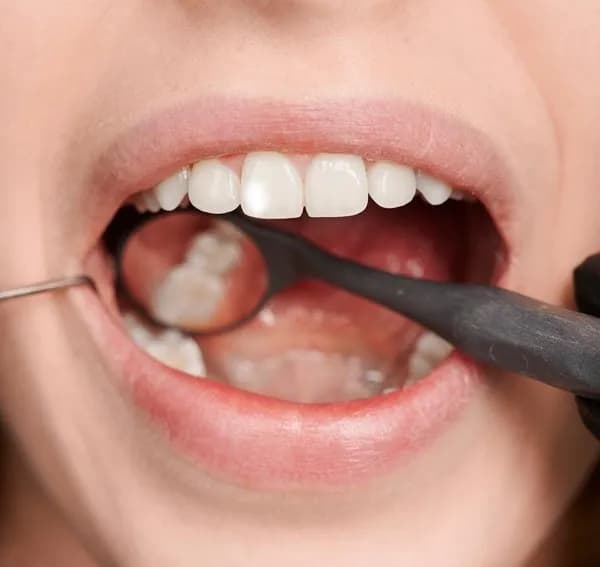
Fluorosis refers to changes in the color and structure of tooth enamel that result from the body being exposed to more than the optimal level of fluoride for a long period during the development of the teeth. The main cause of this condition is excessive fluoride intake. It usually shows up on the tooth surface as chalky white opaque lines or spots, or, in more advanced cases, as yellow and brown staining. Although it is mostly regarded as a cosmetic issue, this condition arises from a difference in the tooth's own structure and is not an external stain. The appearance of fluorosis varies from person to person depending on the amount and duration of fluoride exposure.
What Is Fluorosis and What Are Its Main Types?
You can think of fluorosis as the body's reaction to too much fluoride. Fluoride is a mineral that is abundant in nature and is in fact critical for our dental health. When taken in the right amounts, it strengthens tooth enamel like a shield and protects against decay. But as with anything beneficial, fluoride needs balance. When taken in high doses and over a long time, this protective mineral itself can cause certain problems.
Fluorosis is not just a simple cosmetic matter that concerns only the teeth. Different systems of the body can be affected in various ways, depending on the amount of fluoride exposure and how long that exposure lasts. There are three main types, based on the areas that fluorosis affects:
Dental Fluorosis: This is the type we encounter most often, and it directly affects the teeth. It usually occurs when too much fluoride is taken in during the first eight years of life, while our permanent teeth are still forming beneath the gums. Signs can range from mild white spots to dark stains that completely change the color of the tooth. It usually causes no pain and does not affect the basic functions of the teeth, such as chewing. For this reason, it is mostly a concern about appearance.
Skeletal Fluorosis (Bone Fluorosis): As the name suggests, this type targets the bones and joints. It develops as a result of continuously taking in very high levels of fluoride over many years. It can lead to more serious health problems, such as joint pain and limited movement. It is rarely seen except in certain geographic regions where natural fluoride levels in drinking water are very high.
Non-Skeletal Fluorosis: This is a condition that generally affects the digestive system and can be considered a precursor of skeletal fluorosis. It can show itself with symptoms such as abdominal pain, bloating, and loss of appetite.
What Causes Dental Fluorosis and How Does It Affect Tooth Development?
Dental fluorosis occurs when a child continuously takes in more fluoride than the body needs while the enamel layer of the permanent teeth is forming, that is, during that critical period in the first eight years of life. Excess fluoride taken in during this period interferes with the normal formation of enamel, the outermost protective shield of the tooth.
We can compare this process to construction. The minerals that are the building blocks of enamel need to be placed in the right spots, at the right time, and in the right amounts. Excess fluoride disrupts the delicate balance in this building process. It slows the work of the cells that form enamel (ameloblasts) and prevents the normal processing of the proteins in the enamel structure.
As a result, the enamel that forms is not as hard and dense as it should normally be. You can think of it as a more porous layer of enamel that has not fully hardened and is more like a sponge. The chalky white or opaque spots we see on the tooth surface are caused by light being reflected differently from this abnormal, porous enamel structure.
How noticeable fluorosis will be depends on three main things: how much fluoride was taken in, how long this went on, and at which stage of tooth development the fluoride intake took place. Once the teeth have fully erupted, there is no longer a risk of new dental fluorosis spots forming.
What Are the Sources of Fluoride That Lead to Fluorosis?
The risk of fluorosis usually comes not from a single source but from fluoride from multiple sources building up over time. For this reason, it is important to know all the possible sources. The main sources of fluoride are the following:
Drinking water (especially well water in regions where the natural fluoride level is high)
Fluoride toothpaste that is swallowed
Fluoride supplements (drops, tablets) used unnecessarily or in high doses
Infant formula prepared with fluoridated water
Some ready-made foods and drinks processed with fluoridated water
Tea (the tea plant naturally accumulates fluoride)
Fluoride mouth rinses (especially because of the risk of swallowing in young children)
Who Is at Risk of Developing Fluorosis?
Some groups are at higher risk of developing dental fluorosis. Knowing these risk groups is the first step in taking precautions:
Children in the first eight years of life (because their permanent teeth are developing)
People living in regions where the natural fluoride level in drinking water is high
Families who use well water and do not know its fluoride level
Young children who have a habit of swallowing toothpaste
Children who take fluoride supplements without a doctor's or dentist's recommendation
Those who continuously use fluoridated water when preparing infant formula
What Are the Signs of Dental Fluorosis and How Can You Recognize Them?
Healthy teeth unaffected by fluorosis look smooth, shiny, and a single uniform color (usually a pale creamy white). The appearance of dental fluorosis, on the other hand, varies considerably depending on the severity of the condition.
Signs of mild fluorosis include:
Very faint, chalky white spots on the tooth enamel
Thin, paper-white lines
Small, dot-like white specks
Subtle opacity that can usually be noticed only by a dentist
Signs of moderate fluorosis include:
Opaque white areas covering a larger part of the tooth surface
Yellowish or light brown stains on the tooth surface
More pronounced, visible color changes
Signs of severe fluorosis include:
Widespread and intense stains ranging from yellow to dark brown
Visible pits and hollows on the tooth surface
A rough, worn-looking enamel surface
Sometimes distortions in the overall shape of the tooth
If you notice an appearance like this that differs from normal on your child's teeth, the best approach is to consult a dentist to evaluate the situation.
How Is Dental Fluorosis Classified?
Dentists use standard classification systems to objectively assess the severity of fluorosis and decide on the appropriate treatment. The most widely used system divides the condition into different categories according to the severity of the signs.
Normal: The enamel is smooth, shiny, and free of stains.
Questionable: There are very slight deviations from the normal appearance of the enamel.
Very Mild: There are opaque white areas covering a small part of the tooth surface.
Mild: The white spots are larger but still cover less than half of the tooth surface.
Moderate: More than half of the enamel surfaces are affected, and brown stains are usually seen as well.
Severe: The entire enamel surface is affected, with pitting and marked discoloration.
How Is Fluorosis Diagnosed and How Is It Told Apart from Other Dental Problems?
Diagnosis of fluorosis begins with a careful clinical examination by the dentist. The dentist looks for signs specific to fluorosis by drying the teeth and examining them from different angles under a special light. However, a visual examination alone is not enough for a diagnosis.
The patient's history, that is, their history of fluoride exposure, is the key to diagnosis. The dentist asks in detail about the condition of the water where the patient lives, the toothpaste they used in childhood, and whether they took fluoride supplements. A history of excessive fluoride intake strengthens the clinical findings.
It is also very important to distinguish fluorosis from other conditions that cause staining of tooth enamel. Fluorosis has some distinguishing features:
Symmetry: Fluorosis is usually symmetrical, meaning it appears in a similar way on the same teeth on the right and left sides of the mouth.
Distribution: The spots usually do not have sharp borders and blend indistinctly into healthy enamel.
Resistance: Ironically, enamel with mild and moderate fluorosis is more resistant to decay than normal enamel.
An accurate diagnosis and differential diagnosis are possible only through a comprehensive evaluation by a dentist experienced in this area.
How Can the Development of Dental Fluorosis Be Prevented in Children?
Preventing fluorosis in children depends largely on parents being informed and attentive. The goal is to prevent excessive fluoride intake without losing the benefit of protection against decay. Here are some simple but effective precautions parents can take:
The Right Amount of Toothpaste: For children from the eruption of the first tooth up to age 3, a smear of fluoride toothpaste about the size of a grain of rice should be used, and for children aged 3 to 6, an amount about the size of a pea.
Supervised Brushing: To keep children under 6 in particular from swallowing toothpaste, an adult should always be with them while they brush and should help them rinse their mouth well afterward.
Know Your Drinking Water: It is important to find out the fluoride level of the tap water in your area or of the well water you use.
Be Careful with Supplements: Fluoride drops or tablets should be used only when prescribed by a doctor or dentist.
Preparing Formula: Pay attention to the fluoride content of the water used when preparing infant formula.
What Treatment Options Are Available for Dental Fluorosis?
Many mild cases of fluorosis do not require treatment. The decision to treat usually depends on how bothered a person is by the appearance of their teeth. Modern dentistry offers a wide range of options for improving the appearance of fluorosis stains, from the methods that intervene least in the tooth tissue to more comprehensive solutions.
The available treatment options are as follows:
Teeth Whitening (Bleaching): Lightens the overall color of the teeth so that white fluorosis spots become less noticeable.
Enamel Microabrasion: Gently removing a very thin (micron-level) layer from the outermost part of the tooth enamel with a special paste. It is quite effective for superficial stains.
Resin Infiltration: A modern, conservative method in which a flowable material is infiltrated into the spot, improving its appearance without touching the tooth at all.
Bonding (Composite Applications): Covering stains and imperfections with tooth-colored cosmetic filling materials.
Porcelain Veneers (Laminates): Very thin porcelain shells bonded to the front surfaces of the teeth. They give excellent cosmetic results, especially in severe cases.
Crowns: Restorations that fully cover the tooth to protect it and restore its appearance in the most severe cases of fluorosis, where the enamel structure has become very weak.
The most suitable treatment for you is decided after a detailed evaluation with your dentist.
How Does Fluorosis Affect People's Quality of Life?
The appearance of our teeth has a far greater effect on our social life and self-confidence than we may think. When fluorosis is noticeable, especially on the front teeth, it can make people hesitant to smile and uncomfortable in social settings. This can negatively affect a person's perception of their appearance and their self-esteem.
Especially during periods like adolescence, when outward appearance comes to the fore, teeth with fluorosis can be a serious source of worry. People may feel they could be laughed at or judged negatively because of their stained teeth. This psychological effect shows that fluorosis is not just a tooth stain but a condition that can affect a person's quality of life. However, this effect varies from person to person and with the severity of the fluorosis. Some people are not bothered at all by mild fluorosis, while for others even the smallest spot can be a big problem.
When Should You See a Dentist If You Suspect Fluorosis?
The moment you notice something different from normal on your own or your child's teeth, such as whitish areas, lines, or yellow or brown spots you had not seen before, is the right time to consult a dentist. If you are not happy with the appearance of your teeth and suspect it may be fluorosis, getting a professional opinion is the best step.
Seeing a dentist early allows a correct diagnosis to be made and rules out other problems that could cause staining, such as early-stage tooth decay. Your dentist will determine whether the condition is fluorosis, how severe it is, and what its possible causes are. If there is ongoing excessive fluoride exposure, they will give you practical advice specific to your situation to prevent it. If the current condition is a cosmetic concern, they will explain the most suitable treatment options in full detail and help you make the best decision together. Remember that your dentist is your most trusted guide on every matter concerning your oral and dental health.