

 Spec. Dt. Gökcan ErtaşOrthodontist
 Dt. Sena KırcaDentist
 Dt. Sevinç Cansu KayıranDentist
 Assoc. Prof. Dr. Sezin ÖzerPediatric Dentist
 Spec. Dt. Sude Yıldırım BolatSpecialist in Periodontology
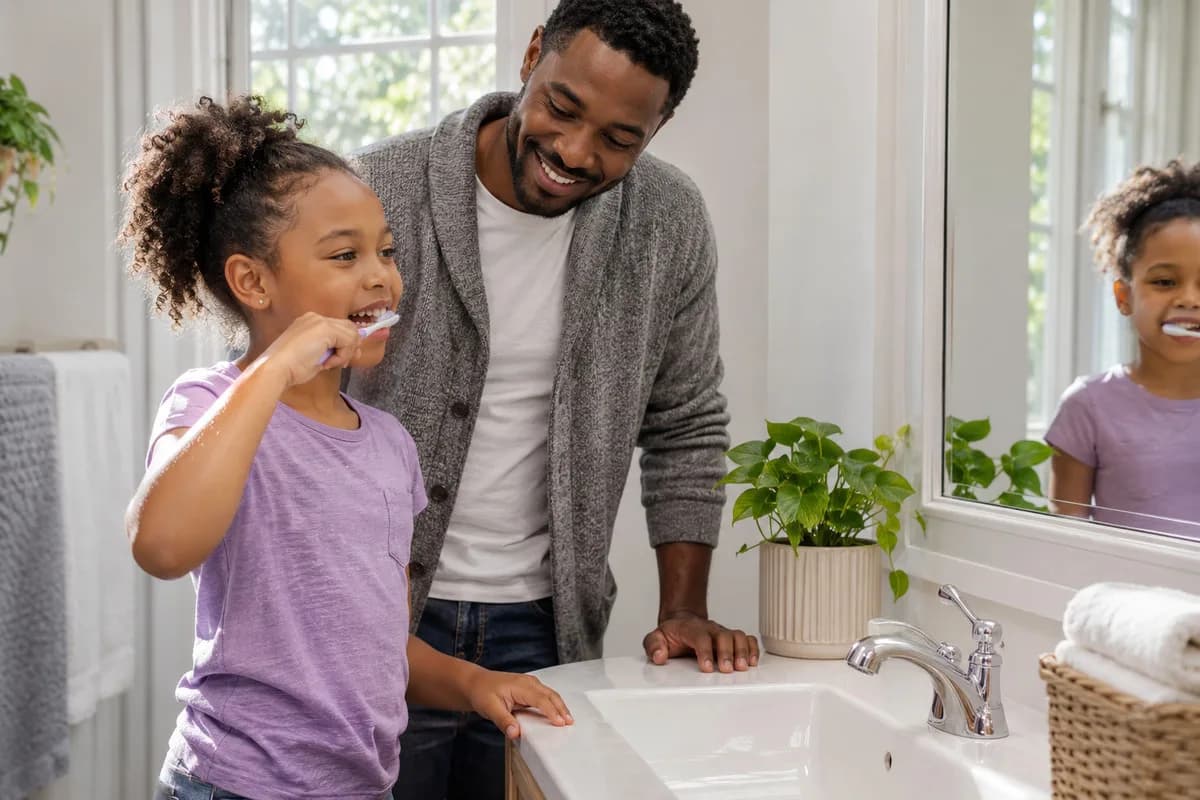
At what age can children brush their teeth on their own? Many can manage around age 7, but parents should keep checking their technique and help when necessary.
Holding a toothbrush is only one part of cleaning teeth. A child may happily brush the front teeth while missing the backs, chewing surfaces or gumline. Responsibility therefore changes gradually. Parents reduce hands-on help when the child can consistently clean the whole mouth, rather than automatically stepping back on a particular birthday.
This Dental Prime guide explains how to approach that change: what different ages usually need, which skills to observe and how to keep support practical. It provides general education, not an individual assessment. A dentist can adapt the routine to a child's oral health, development and any additional support needs.
Until What Age Do Children Need Help With Brushing?
Many children can begin doing their own brushing at about 7 years old. Parents should still watch that they brush thoroughly and for long enough. NHS guidance separates the help needed by young children from the continued supervision needed when older children start managing the brush themselves. Turning 7 does not end that supervision.
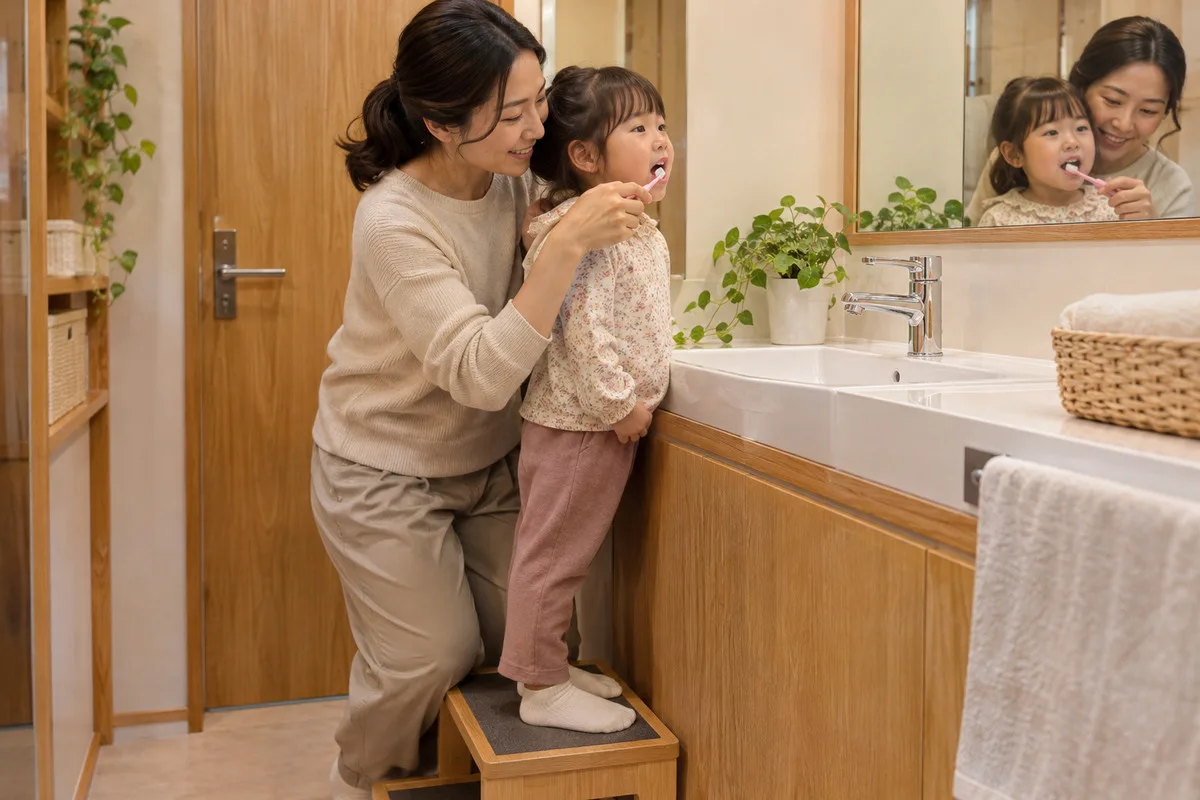
This is not the age to start cleaning teeth. Brushing begins when the first tooth appears, with an adult providing the care. Young children can practise holding and moving a brush much earlier than they can clean effectively. Letting them have a turn should not mean leaving the final cleaning entirely to them.
Age group | Child's participation | Adult's responsibility |
|---|---|---|
Under 3 | Gets used to the brush and routine | Brushes the child's teeth |
Ages 3-6 | Practises under supervision | Performs or finishes the brushing |
Around 7 and older | Brushes if skills allow | Checks time and coverage, helping when needed |
These age groups are a guide rather than a test. Two children of the same age may need different amounts of assistance. One may reach the back teeth easily while another struggles to control the handle. The aim is to keep teeth clean while encouraging participation, without asking a child to manage more than they can.
Watch the routine under ordinary conditions, including tired evenings. A child who manages comfortably on a relaxed weekend may need more help before bed on a school day. Independence can vary with concentration and energy, so support should remain flexible rather than being withdrawn after a single good attempt.
How Can You Tell If A Child Is Ready To Brush Independently?
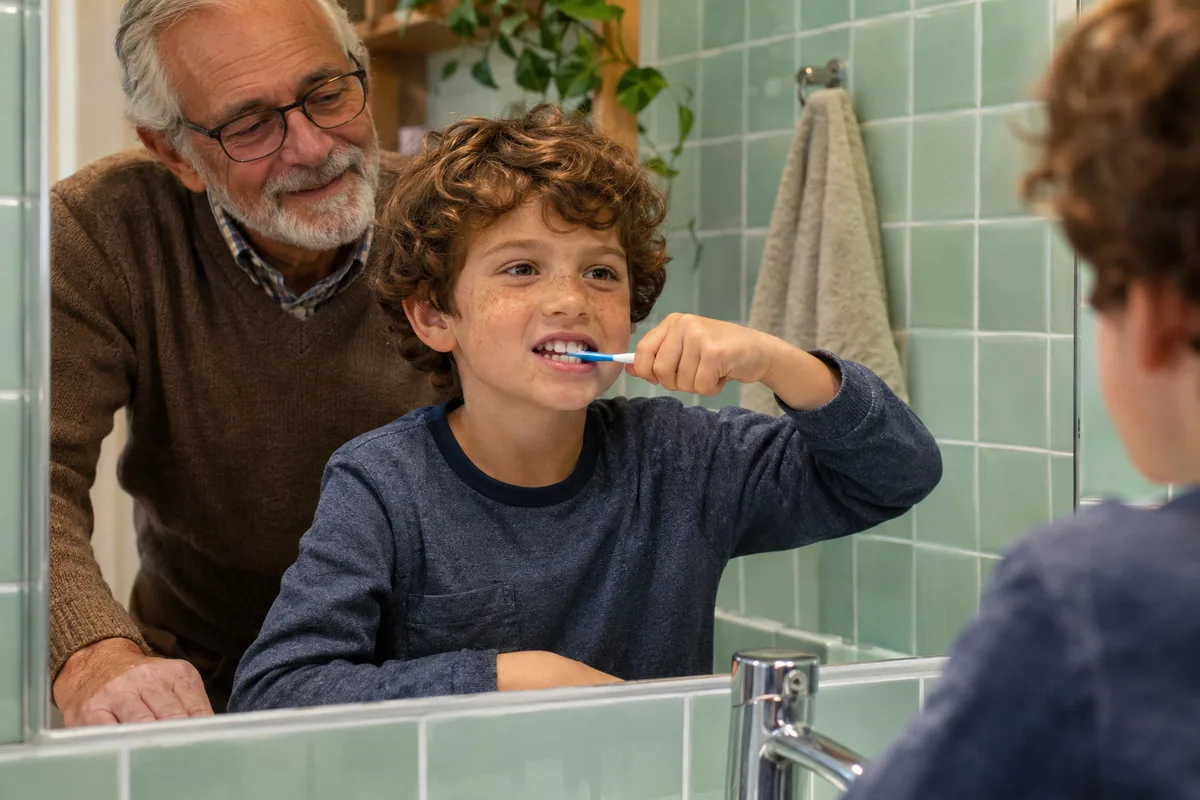
Look at what happens while the child brushes. Can they move beyond the front teeth and reach the outside, inside and chewing surfaces? Do they remember the upper and lower teeth? Can they reach the back of the mouth and clean gently along the gumline? These observations are more useful than simply asking whether they brushed.
Brushing should take around two minutes, but the timer does not measure coverage. Spending that time on the same few teeth leaves other areas untouched. A repeatable sequence helps a child work through the whole mouth. Parents can offer a brief reminder when a section is missed and provide physical help if the reminder is not enough.
Is Hand Coordination Enough?
Skills such as writing or tying shoelaces may suggest improving coordination, but they do not prove that teeth are being cleaned well. Brushing also involves attention, controlled pressure and knowing where the brush is inside the mouth. No single everyday milestone should be treated as a reliable home test for ending adult supervision.
Notice whether the child can use an appropriate amount of toothpaste and spit out the excess without deliberately swallowing it. An adult can put the toothpaste on the brush while the child develops these skills. If the brush repeatedly slips or the child rushes through the task, they can still practise before an adult finishes.
Look for a pattern across different days instead of judging one session. Also separate remembering to brush from being able to clean: a child may need reminders to start while having reasonable brushing skills. Conversely, eagerly starting the routine does not necessarily mean they can reach every surface without assistance.
How Can Parents Gradually Hand Over Brushing?
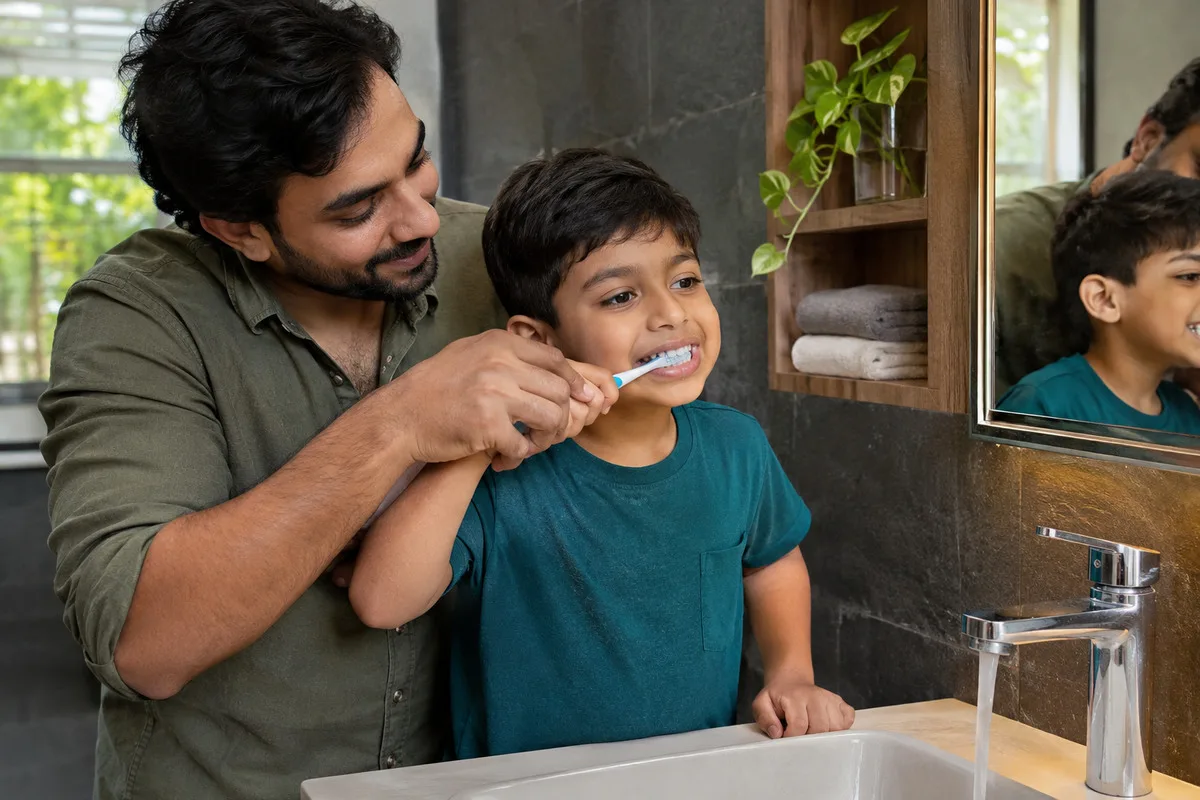
Start with shared responsibility. The child has a turn and the adult then completes areas that were missed. As control improves, reduce the part done by the adult. The amount of help can change with the child's skills and attention that day; there is no need to make an all-or-nothing decision.
Using a mirror together can make instructions easier to follow. A parent can demonstrate their own routine, then give one specific prompt such as “Let's clean the inside of the back teeth too.” This tells the child what to do next more clearly than repeatedly asking them to brush better.
Let The Child Practise, Then Finish Together
Explain the order before starting. Saying that the child will brush first and an adult will help finish makes taking the brush less unexpected. The finishing step is part of ordinary care, rather than a punishment for getting something wrong. Keep the explanation short enough to use consistently every day.
Later, an adult may watch without holding the brush throughout. If a surface is missed, try a clear verbal reminder first, followed by hands-on help when needed. The aim is to preserve effective cleaning while letting the child do the parts they can manage. Avoid turning each session into a stressful examination.
There is no fixed number of days or weeks for this transition. If cleaning becomes less thorough after help is reduced, provide more help again. Illness, tiredness or a change in routine may also affect performance temporarily. Returning to shared brushing does not mean the child has failed to learn.
When different adults provide care, agree on a similar sequence and level of support. Consistency helps the child know what to expect. One adult need not leave them completely alone while another corrects every movement. Keep the routine predictable, with enough flexibility to respond when the child needs additional help.
What Should Parents Check During Brushing?
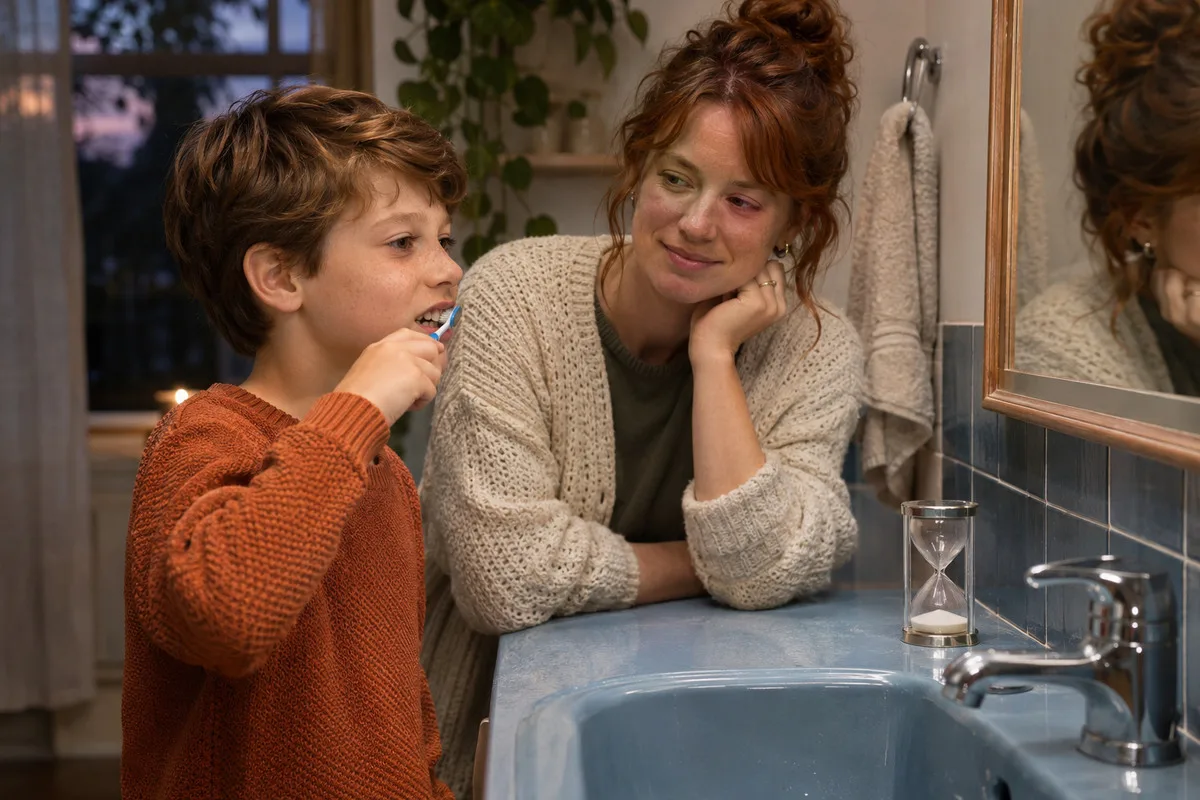
Begin with frequency: teeth should be brushed twice a day, including last thing before bed and on one other occasion. A wet toothbrush or a visit to the bathroom does not show that brushing was thorough. During the transition, watching the process gives more useful information than checking whether the brush was used.
Check coverage as well as the roughly two-minute duration. The backs of the teeth, chewing surfaces and gumline are easily overlooked. A small-headed, soft-bristled brush helps with access. Encourage gentle, controlled movements rather than forceful scrubbing. Pressing harder does not make up for skipping a part of the mouth.
For the practical movements, see the guide to toothbrushing technique. During the handover, observe whether the child can apply those movements without copying an adult at every step. If a surface keeps being missed when they follow their own sequence, that area still needs guidance or adult cleaning.
Toothpaste And A Safe Setting
Use fluoride toothpaste from the first tooth, in an age-appropriate amount. General guidance recommends a rice-sized smear for children under 3 and a pea-sized amount for ages 3-6. A dentist can advise on the appropriate product and any individual requirements. A long strip shown on packaging is not a guide to a young child's portion.
After brushing, spit out the excess and avoid rinsing straight away with water so fluoride can remain on the teeth. Supervise toothpaste use to discourage swallowing. Children should stay still while brushing rather than running with a brush in their mouth. If a step is needed at the sink, it should be stable and suitable.
A quick look at the teeth cannot confirm that all plaque has been removed. Teeth can appear white while some surfaces remain poorly cleaned. Treat home observation as a way to guide support, not as a guarantee. Dental examinations and an individually recommended review schedule complement the family's daily routine.
What If A Child Does Not Want To Brush?
Consider when the difficulty occurs. A late bedtime, an unpleasant toothpaste flavour, a brush that feels too large or discomfort may contribute. If a child who previously brushed comfortably suddenly avoids it, ask about pain rather than assuming they are being difficult. New or persistent symptoms deserve a dental assessment.
Choose a predictable time and offer small, appropriate choices. For example, the child could select between two suitable brushes. The choice concerns how to complete care, rather than whether teeth will be cleaned. Brushing together at the mirror can also make the routine easier to understand and less like an isolated demand.
A sand timer or short song may help with timing, but it cannot check whether all teeth were reached. Notice a specific effort, such as remembering the inside surfaces, instead of relying on exaggerated praise. The feedback then connects to an action the child can recognise and repeat at the next session.
Avoid frightening a child with threats about decay or shaming them for needing help. Sugary foods are not a suitable brushing reward. If strong resistance continues, ask a dentist for a manageable approach. Pain, repeated bleeding or persistent sensitivity should not be addressed simply by insisting that the child brush for longer.
When Might Children Need Help For Longer?
Some children need extended assistance because of difficulties with hand control, vision, sensory responses or development. Age alone does not reveal these needs. Observe which parts of the task are manageable, where support is needed and whether the equipment or setting creates an obstacle. Adaptations should respond to that child's experience.
Longer-term help does not mean the child cannot learn. Depending on individual needs, a different brush head, an easier grip or a calmer setting may be useful. Discuss suitable changes with a dentist. Buying a new device does not by itself show that an adult can stop helping with cleaning.
Braces, an appliance or another factor affecting access may require additional instruction. Position the child comfortably and safely so both the adult and child can manage the task. If brushing hurts, seek advice about the cause. Do not try to solve the problem by forcing the mouth open or applying more pressure.
Participation and support can continue together. An adult may place toothpaste on the brush, the child may start, and the adult may finish the back surfaces. Dividing the task this way makes the actual need for help clearer. The goal is effective care suited to the child, rather than independence at any cost.
How Can A Dentist Assess The Transition?
A dentist can consider oral cleanliness, decay risk, gum findings and the family's routine together. Watching the child brush may help identify repeatedly missed areas. The level of assistance and review interval can then be personalised. An age-based expectation alone cannot provide the same information as observing the child and examining their mouth.
During a pediatric dentistry assessment, useful questions include “Which surfaces should I finish?” and “Is this brush suitable for my child?” Practical questions help turn advice into a routine the family can follow. The first dental visit should not wait until independent brushing; arrange it when the first tooth appears, by the first birthday.
When discussing care with a dental clinic in Samsun, sharing the brush or toothpaste used at home may be helpful. Explain which part of the routine is difficult and whether it changes between morning and evening. A description of normal daily care is more informative than asking the child to perform unusually well for one demonstration.
Repeated gum bleeding, pain, persistent bad breath or a visible change in a tooth needs assessment rather than a simple increase in brushing time. Home brushing does not diagnose or treat an established cavity. A dentist can check the cause and recommend follow-up based on individual risk instead of assuming every child needs the same interval.
Conclusion
At what age can children brush their teeth on their own? Around 7 is a useful general starting point, with supervision and help continuing as needed. Age, holding a brush and completing two minutes are not enough on their own. Parents should also consider whether the child consistently reaches all tooth surfaces and maintains the daily routine.
Allow practice, finish missed areas and reduce hands-on help gradually. Keep twice-daily brushing, including before bed, and adjust support when tiredness or other needs affect the task. Seek individual advice if there is pain, persistent resistance or uncertainty about cleaning. Continuing to help protects daily care while the child's skills develop.