Spec. Dt. Gökcan ErtaşOrthodontist
 Dt. Sena KırcaDentist
 Dt. Sevinç Cansu KayıranDentist
 Assoc. Prof. Dr. Sezin ÖzerPediatric Dentist
 Spec. Dt. Sude Yıldırım BolatSpecialist in Periodontology
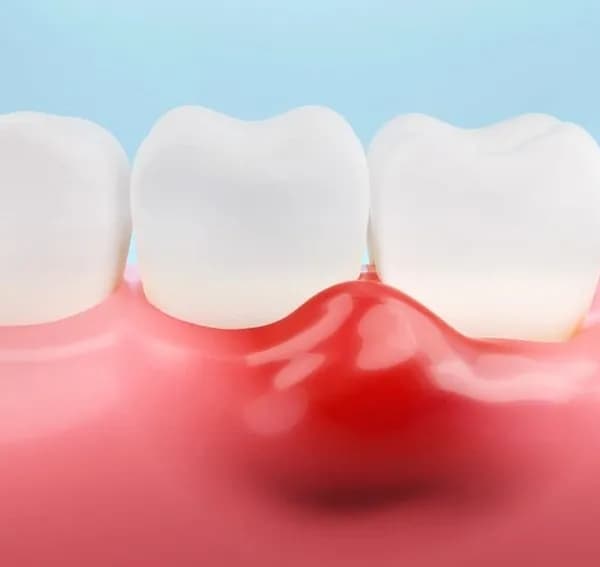
Gum inflammation is caused by factors such as bacterial infection of the gums or a foreign object becoming lodged in them. Most adults experience a gum problem at some point in their lives. Gum diseases can occur at varying levels. If diagnosed early, non-surgical (pus-free) treatments will be sufficient. However, if treatment is delayed, the disease may be accompanied by bone loss and gum recession. Surgical methods may be needed for its treatment. Early diagnosis and treatment of gum diseases is of great importance. For this reason, it is necessary to know the symptoms of gum infections.
Symptoms of gum diseases
Redness and swelling of the gums: Healthy gums are light pink in color. The first sign of infection in the gums is redness, and it is a marker that a problem has begun. If neglected, it progresses somewhat further and continues with swelling.
Bleeding when brushing: Inflammation is one of the important findings of gum disease. If you have bleeding when brushing or bleeding on touch, you should see your dentist.
Gum recession: In advanced gum disease, it accompanies bone loss. If you have gum recession, there is certainly an advanced disease. And surgical techniques may be needed for its treatment.
Loose teeth:
Bad breath: Under normal conditions, the mouth contains a large number of bacteria, which feed on the plaque that accumulates on the tooth surface. When plaque is not cleaned, the number of bacteria in the mouth also increases. The bacteria release toxins that can irritate the gums and teeth and cause a bad odor in the mouth. Bad breath can be a sign of gum disease.
Sensitive teeth: Excessive sensitivity of the teeth to cold and heat is among the symptoms of gum disease and usually appears together with gum recession.
Treatments for gum diseases
The treatment method varies depending on the stage of the disease, how well previous treatments have worked, daily care, the amount of smoking, and general health status. Treatments fall into two categories: those that require a surgical method and non-surgical treatments.
Gum treatments that do not require surgery are as follows:
Professional Tartar Removal
When we do not perform adequate and effective oral care, plaque and tartar build up on the tooth surfaces and cause infectious gum diseases. Tartar harbors harmful bacteria. It is possible to get rid of this problem with professional teeth cleaning. In professional cleaning, which is a fairly simple procedure, the dentist thoroughly removes plaque and tartar. If a person is prone to gum disease, the dentist may recommend professional tartar removal more than twice a year. Regular tartar removal is effective in preventing gum diseases.
Subgingival scaling and root planing
If the dentist determines that plaque and tartar have built up beneath the gums, they perform removal of the tartar under the gum line and root planing. This procedure is performed under local anesthesia. In the procedure, plaque and tartar above and below the gum line are scraped away. Then, rough spots on the tooth root are smoothed, making it harder for bacteria to attach and multiply.
In some cases, gum treatments require surgery. Gum treatments that involve a surgical procedure are as follows:
Flap surgeries
If bone destruction has progressed considerably, it may be necessary to surgically open and clean the area in order to remove the tartar and infected tissue beneath the gums. The procedure is performed under local anesthesia. The tartar is cleaned, infected tissue is removed, the root surfaces are smoothed, and the gum is closed back in its original position.
Bone Grafting
In bone grafting procedures, bone grafts obtained from the patient's own bone or from synthetic bone are used to replace the bone destroyed by gum disease. These grafts take the place of bone in areas destroyed by periodontal disease and help the bone regenerate in the area. The procedure aims to help the teeth settle back into the bone.
Soft Tissue Grafts
This is applied to areas where the gums have receded and are thin. Under local anesthesia, gum tissue taken from the palate is sutured to the affected area. With this procedure, thin gums are strengthened or the areas where the gums have receded (areas where the tooth root is exposed) are covered.
For any questions you may have, you can consult our Periodontology and Gum Surgery specialist, Specialist Dentist Zehra Gümrükçüoğlu.