
Dental Prime
TR Book an Appointment

What Is Tooth Root Resorption?

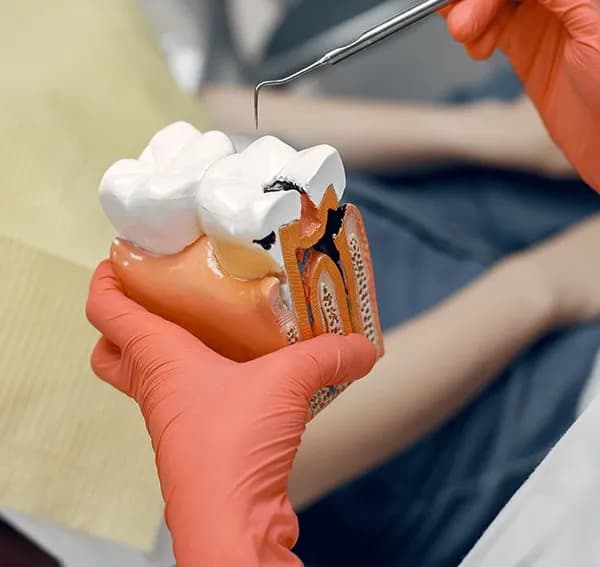
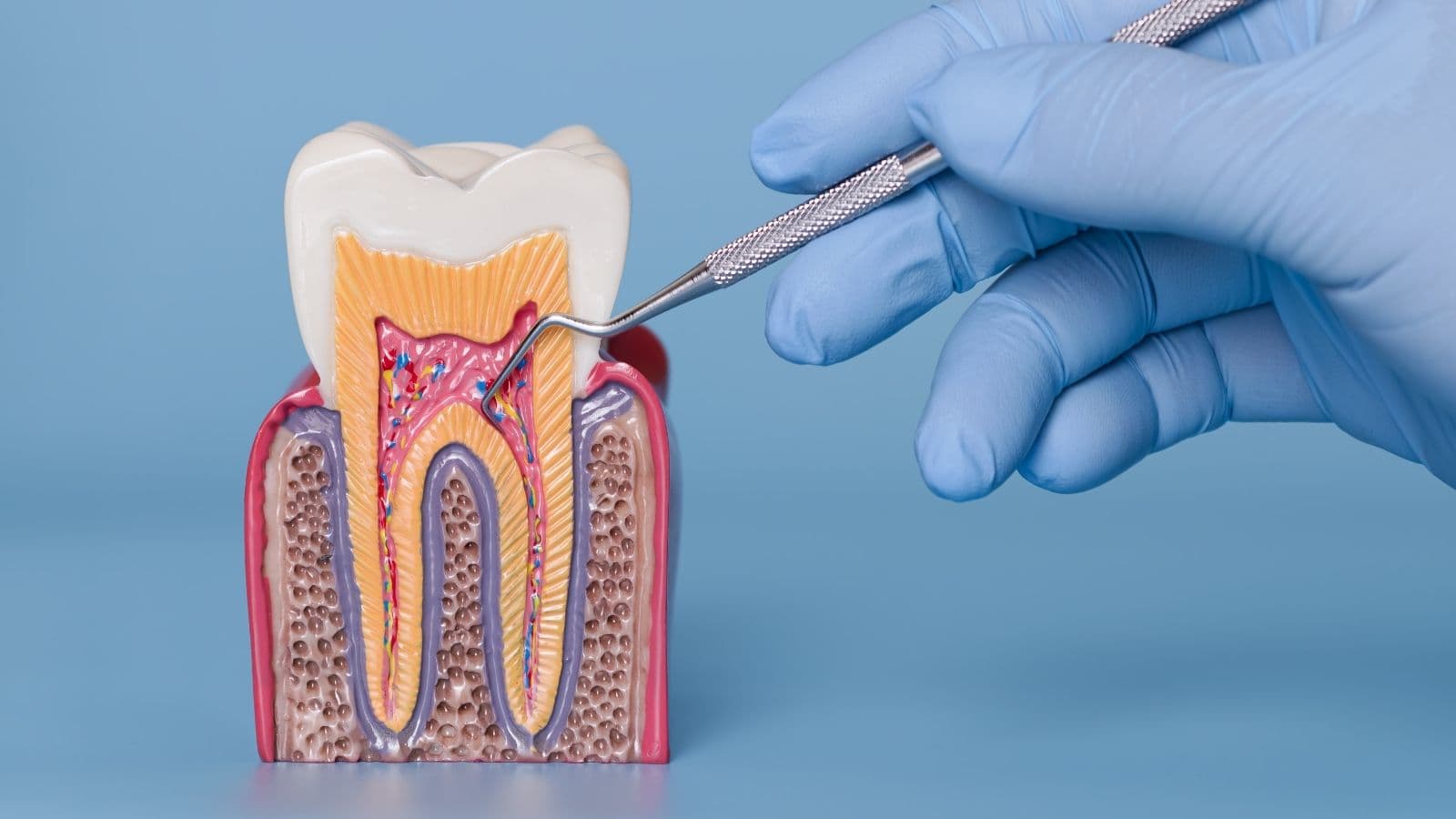
Root resorption is a loss of tooth material and erosion caused by changes at the root tip and inside the tooth (the pulp tissue where the canals are). It often causes no symptoms. Progressive destruction can go as far as complete erosion of the roots.

What is tooth root resorption?
  • Trauma

  • A tooth being knocked out of its socket and replanted (avulsion)

  • Traumatic occlusion (incorrect contacts between the teeth)

  • Cysts and granulomas

  • Impacted teeth

  • Long-standing chronic lesions in the tooth

  • Orthodontic tooth movements

  • It develops as a result of conditions such as bruxism (clenching and grinding of the teeth).

Treatment

In some cases, the underlying cause is resolved and the tooth is monitored. Depending on how far the condition has progressed and on the vitality of the tooth, root canal treatment may be needed. Early diagnosis is very important. That is why we should not skip our regular check-ups.

Frequently Asked Questions

Is root canal treatment a painful procedure?

No. The area is numbed with local anesthesia during the procedure, so the patient does not feel pain. Mild sensitivity may be felt for a few days after the anesthetic wears off; this is easily controlled with pain relievers. The sensitivity usually disappears completely within a week.

How many sessions does root canal treatment take?

Treatment is usually completed in one session for single-canal teeth, and in two to three sessions for teeth with multiple canals or widespread infection. The number of sessions varies depending on the clinical picture determined by the dentist at the examination and on the extent of the infection. The exact session plan becomes clear after the initial examination.

Does the tooth change color after root canal treatment?

Yes, a slight darkening of color may be seen over time in teeth that have had root canal treatment; this is because the tooth loses its blood supply. In areas where there is an aesthetic concern, a crown or internal bleaching methods can eliminate this appearance. These options should be evaluated together with your dentist, especially for teeth in the front region.

About this contentSources and health informationSources

You can review the professional guidelines and patient information resources related to this page below.

  1. Root canal treatmentAccessed: 5 September 2026

Medical Information

This content is for general information. It does not replace an examination, diagnosis or individual treatment plan. Consult your dentist for diagnosis and treatment.

Contact our clinic to arrange a convenient appointment time.

Book an Appointment
Call the ClinicContact and Directions