Spec. Dt. Gökcan ErtaşOrthodontist
 Dt. Sena KırcaDentist
 Dt. Sevinç Cansu KayıranDentist
 Assoc. Prof. Dr. Sezin ÖzerPediatric Dentist
 Spec. Dt. Sude Yıldırım BolatSpecialist in Periodontology
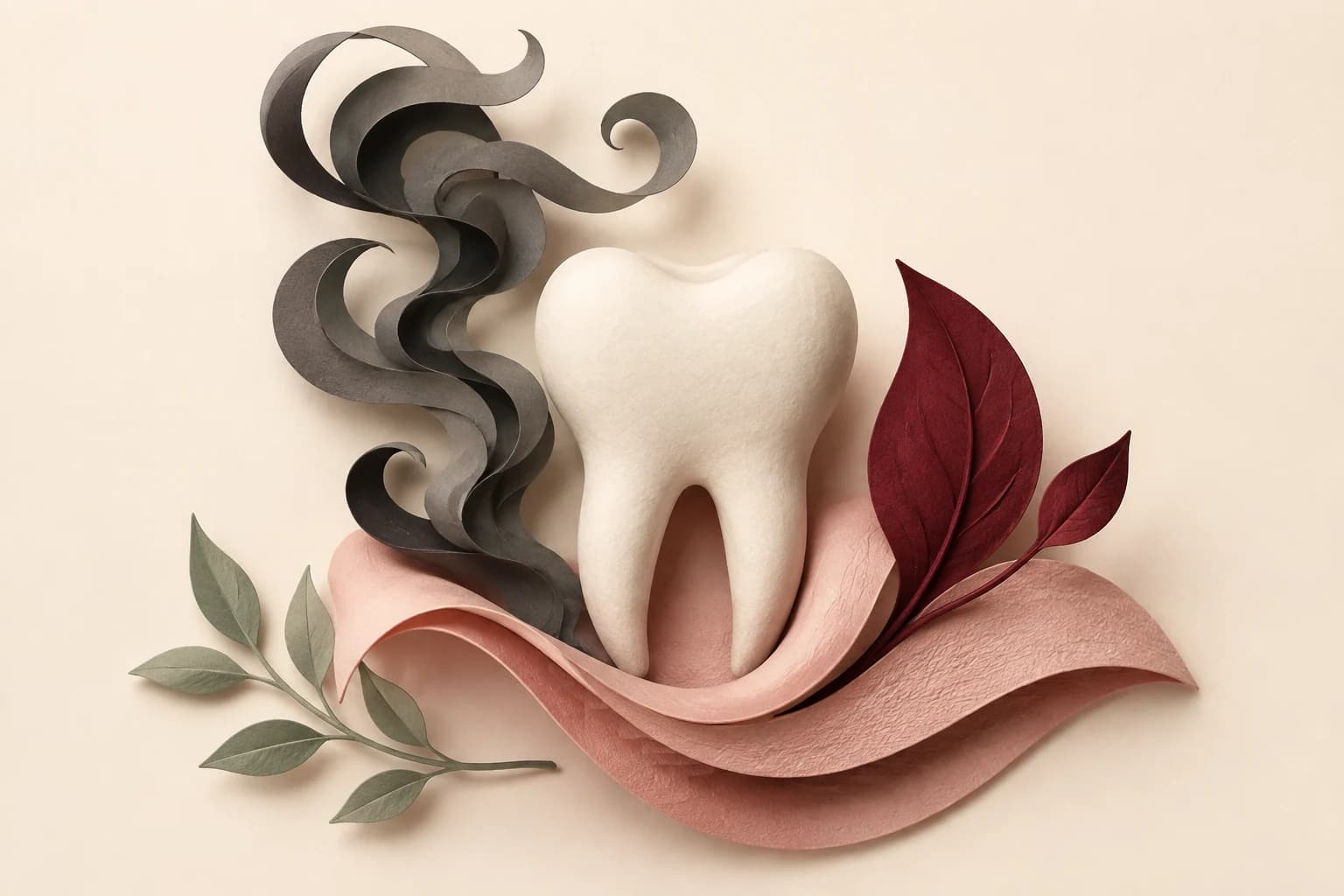
Purple gums occur when the gums lose their healthy pink appearance and turn brown, black, or a dark shade tinged with purple. The causes of discoloration in the gums are quite varied; it may result from smoking, side effects of certain medications, amalgam filling leakage, gum conditions such as gingivitis, or, rarely, it may be a sign of an underlying systemic disease. Signs such as purple teeth and a purple palate may point to a health problem beyond aesthetic concerns. Treatment is planned entirely according to this underlying cause and ranges from professional teeth cleaning to modern methods such as laser lightening.
What Are Purple Gums?
Purple gums are a condition in which the normal pink color of the gums is replaced by purple or a dark reddish color. It is usually a sign of an underlying health problem and should not be ignored.
Possible causes include the following:
Gum inflammation (gingivitis)
Periodontitis (advanced gum disease)
Trauma or teeth clenching
Blood circulation disorders
Side effects of certain medications
Increased pigmentation (may be physiological, especially in people with darker skin)
In cases of persistent discoloration, a dentist should always be consulted, the underlying cause should be identified, and treatment should be planned.
What Causes Purple Gums?
Many different reasons can lie behind a color change in the gums. These range from harmless and temporary conditions to serious problems that require treatment.
Lifestyle and External Factors
Smoking: The nicotine in tobacco triggers melanin production. This leads to brown-black staining (smoker's melanosis), especially on the front gums near the lips. The good news is that these stains may fade over time after you quit smoking.
Medications: Some medications can cause discoloration of the gums as a side effect. If you notice a blue, gray, or brown discoloration in your gums after starting a new medication, you should share this with both the physician who prescribed it and your dentist. Some groups of medications that can cause this effect include:
Some acne medications
Medications used to treat malaria
Some antidepressants
Chemotherapy agents
Amalgam Tattoo: During the placement or removal of old-style silver-colored fillings, tiny metal particles can become lodged in the gum. This usually forms a harmless, tattoo-like blue-black stain right next to the filling and does not require treatment.
Trauma (Bruising): When you bite into a hard food or brush your teeth too hard, your gums can bruise just like your skin. This dark red-purple mark usually goes away on its own within a few days.
Oral Health Problems
Gum Inflammation (Gingivitis): When the gums become inflamed due to plaque buildup, they turn bright red or reddish-purple. Swelling and bleeding accompany it as well.
Periodontitis: This is the advanced form of gingivitis. The gums may turn a dark purple color, and this condition is usually accompanied by pain, gum recession, and loose teeth.
Acute Necrotizing Ulcerative Gingivitis (ANUG): This is a painful and serious gum infection. A layer of dead tissue forming on the gums gives them a gray or black appearance. Severe bad breath is also usually among the symptoms.
Tooth Eruption (Eruption Hematoma): In children, a blood-filled cyst can form over a tooth that is coming in. This makes the gum look dark purple-black in that area. It is usually harmless and disappears once the tooth erupts.
Which Systemic Diseases Can Show Up as Purple Gums?
Oral health is a reflection of general body health. Sometimes a color change in the gums can be the first sign of another problem in the body. For this reason, dentists pay particular attention to such signs during an examination. There are some systemic conditions that can cause purple gums:
Addison's Disease (adrenal gland insufficiency)
Peutz-Jeghers Syndrome (a genetic disorder)
Some HIV-related conditions
Oral Cancer (especially malignant melanoma)
The last item is especially important for those who worry, "Are purple gums a sign of cancer?" Although rare, oral cancers can begin as a dark spot on the gum that does not heal, changes color, and grows. For this reason, it is vital that any unexplained discoloration be evaluated by a professional eye.
What Symptoms Can Be Seen Along With Purple Gums?
A color change in the gum usually does not come alone. To understand the underlying problem, you need to pay attention to the other accompanying symptoms. Some of these symptoms are:
A feeling of swelling or fullness
Sensitivity to touch
Bleeding when brushing or on its own
Persistent bad breath
A feeling of pain or discomfort
Sores or ulcers that have not healed for more than two weeks
A feeling of looseness or wobbling in the teeth
A change in the size, shape, or color of the spot on the gums
What Awaits You When You See a Dentist About Purple Gums?
When you see a dentist because of a color change in your gums, a systematic approach is followed to find the origin of the problem. The process generally includes the following steps:
Detailed patient history and review of risk factors
Oral examination and evaluation of the spot
Measurement of the gum pockets, plaque/tartar check
Dental X-rays if necessary
Biopsy for suspicious lesions (for a definitive diagnosis)
As a result of these evaluations, the cause of the color change is clearly established and a treatment plan tailored to you is created.
What Treatment Methods Are Used for Purple Gums?
The treatment of purple gums depends entirely on the diagnosis. The question "How do purple gums go away?" does not have a single answer; the solution is to eliminate the source of the problem.
Professional Teeth Cleaning: If the problem is gum inflammation (gingivitis), the gums return to their healthy pink color in a short time with tartar removal and plaque removal.
Treatment of the Underlying Disease: In more advanced conditions such as periodontitis, deep cleaning (root planing) and sometimes surgical intervention may be needed. If the discoloration stems from a systemic disease, a referral is made to the relevant medical specialty.
Changing Habits: For stains caused by smoking, the most effective treatment is to quit smoking. If it is a medication side effect, changing the medication after consulting your physician may be an option.
Laser Gum Lightening (Depigmentation): This is a modern and effective solution, especially for those who are aesthetically bothered by widespread brown staining that is genetic or smoking-related. In this procedure, laser energy is used to painlessly peel away the pigmented layer on the surface of the gum. Healing is quite fast and the results can be permanent.
Surgical Methods: As an alternative to laser, performing the same procedure surgically with a scalpel is also an option.
How Can Purple Gums and Stains Be Prevented?
There are many simple but effective steps you can take to protect gum health and prevent discoloration. The best answer to the question of what is good for purple gums is, in fact, to take the measures that keep the problem from ever arising:
Gently brush your teeth and gum line twice a day with a soft-bristled brush.
Clean between your teeth with floss every day.
Eat a balanced and healthy diet and avoid sugary snacks.
Stay away from cigarettes and other tobacco products entirely.
Rinse your mouth with water after consuming staining foods and drinks such as tea, coffee, and red wine.
Try to manage your stress.
Do not skip your dental check-up and professional teeth cleaning at least twice a year.
In Which Cases Are Purple Gums an Emergency Warning?
Although most gum discoloration is harmless, some symptoms signal that you need to see a dentist urgently. You should take these situations, which can be described as "red flags," seriously:
A spot or color change that appears suddenly
A noticeable change in the shape, size, or color of an existing spot
Pain in the discolored area that does not go away
Bleeding for no reason or very easily
Swelling and inflammation
A sore that has not healed for more than two weeks
Your gums give you important messages about your general health. Reading these messages correctly and getting professional support when needed is the best way to protect both your oral health and your overall health. Even at the slightest abnormal change in your gums, do not hesitate to put your worries aside and consult a specialist.