



 Spec. Dt. Gökcan ErtaşOrthodontist
 Dt. Sena KırcaDentist
 Dt. Sevinç Cansu KayıranDentist
 Assoc. Prof. Dr. Sezin ÖzerPediatric Dentist
 Spec. Dt. Sude Yıldırım BolatSpecialist in Periodontology
Nicotine and the chemicals in smoke reduce blood flow in the gums, suppress the immune response, and delay healing. This affects not only the visible symptoms but also the long-term success of treatment.
Although the effects of smoking on oral health vary from person to person, the underlying mechanisms are well described scientifically. In this article we cover the topic with its scientific basis; for your questions, you can book an appointment with the Dental Prime team.
What Does Smoking Do to the Gums?
The nicotine and carbon monoxide in cigarette smoke narrow the small blood vessels that nourish the gum tissue. When blood flow decreases, the amount of oxygen and nutrients reaching the tissue drops and cell renewal slows down. Over time, this also weakens the gum tissue's resistance to external factors.
These effects become permanent not after a single cigarette but with regular, long-term use. Even after quitting, it can take time for some changes to reverse completely; for this reason, preventive measures should begin at an early age.
In addition, the hundreds of chemicals in cigarette smoke disturb the natural balance of bacteria in the mouth. While harmful bacterial species multiply more easily, the proportion of beneficial flora that protects the tissue declines. In the long term, this imbalance reduces the gum tissue's resistance to inflammation.
How Does Nicotine Affect Blood Vessels?
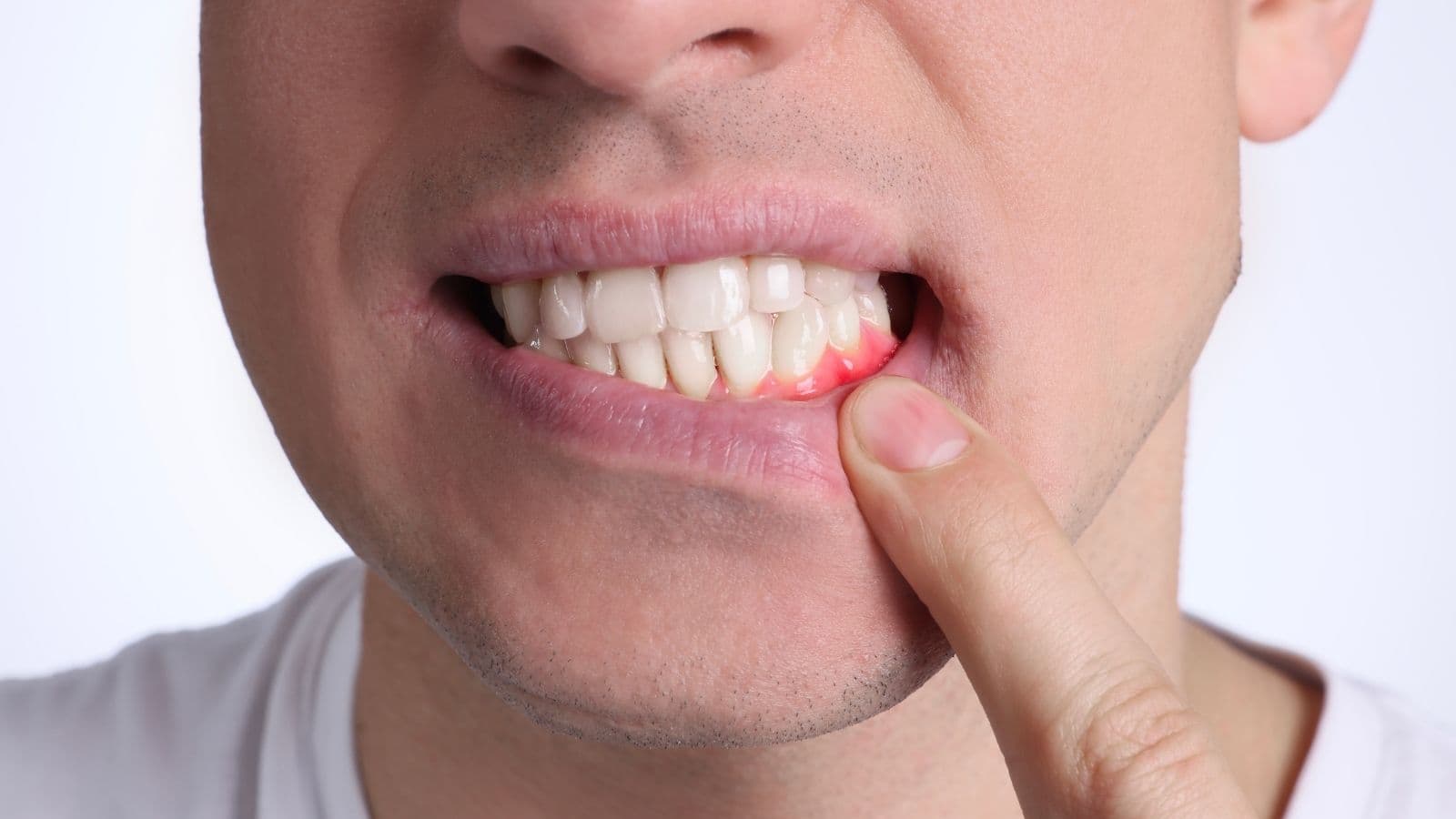
Nicotine contracts the muscles in the vessel wall, causing vasoconstriction. This narrowing can make the gums look paler than their normal color and, in some areas, make the tissue look darker than expected. The effect is not limited to the moment of smoking; with regular use it becomes a lasting condition.
Why Does the Immune System Weaken?
Smoking weakens the response of the immune cells in the mouth to bacteria. The capacity of white blood cells to neutralize plaque bacteria drops, which makes it easier for infection to spread. As the immune response weakens, the body's speed in repairing minor irritations also slows down.
How Does Smoking Affect the Salivary Glands?
Cigarette smoke also slows the function of the salivary glands, weakening the natural cleansing mechanism of the mouth. As the amount of saliva decreases, food debris and bacterial plaque stay longer on the tooth surfaces and along the gum line. This sets the stage for an increased risk of both cavities and inflammation.
Why Does Smoking Mask Gum Bleeding?
In healthy gums, early inflammation announces itself through bleeding; this is an important warning sign that prompts the patient to see a dentist. In smokers, because the blood vessels are narrowed, this bleeding response is largely suppressed.
As a result, while gum disease progresses silently, the patient may believe they are healthy. This leads to delayed diagnosis, and the lost time deepens the damage to the tissue; this is why regular check-ups are even more important for smokers.
Some patients assume their oral health is in order when they do not see slight bleeding while brushing. In people who smoke, however, this misconception can hide a period in which the disease is progressing unnoticed; for this reason, it is necessary to pay attention not only to bleeding but also to small changes in the color and shape of the gums.
For this reason, in clinical examinations dentists give special importance not only to bleeding but also to pocket depth measurements and X-ray findings. Because visual signs can be misleading in smoking patients, regular periodic check-ups become even more critical. These measurements provide a much more reliable indicator than bleeding for determining the true stage of the disease; gum treatment applied in cases detected early ends with a much higher success rate.
Simple self-observation at home can also give you some idea: darkening of the gum color, slight swelling, or tenderness to the touch are signs that call for consulting a dentist even when there is no bleeding. People who smoke are advised to be more attentive to such subtle changes.
Why Does Gum Disease Progress Faster in Smokers?

When reduced blood flow, a weakened immune system, and delayed diagnosis come together, gum disease progresses markedly faster than in non-smokers. Bone loss starts earlier, and loosening of the teeth can be seen at younger ages.
As the amount and duration of smoking increase, this rate of progression also increases. In people who have smoked regularly for many years, bone loss is much more pronounced than in those who smoke for a short time or only occasionally.
How Do the Stages of Periodontitis Progress?
Stage | Gum Finding | Effect of Smoking |
|---|---|---|
Gingivitis | Mild redness, swelling | Bleeding sign is masked |
Early periodontitis | Increased pocket depth | Progression speeds up |
Moderate periodontitis | Bone loss begins | Healing response weakens |
Advanced periodontitis | Loose teeth, risk of tooth loss | Treatment success decreases |
As can be seen from the table, the effect of smoking shows itself differently at each stage. Irritation that goes unnoticed in the early stage can turn into permanent tissue loss as long as smoking continues.
How Does the Amount of Smoking Change the Risk Level?
In risk assessment, dentists generally look at the product of the number of cigarettes smoked per day and the duration of use. In people who have smoked heavily for many years, gum disease both starts earlier and responds less well to treatment; therefore, even reducing the amount can make a measurable difference in risk.
What Is the Difference Compared With Non-Smokers?
Research shows that the likelihood of advanced-stage gum disease is many times higher in regular smokers than in non-smokers. This difference is evident not only in how often the disease occurs but also in how fast it progresses.
We covered the detailed symptoms of this condition in our article on gum disease and periodontitis; the early warning signs seen in non-smokers are often noticed later in smokers.
Other Effects of Smoking on Oral Health

Smoking affects not only the gums but oral health as a whole. Many symptoms, from discoloration of the tooth surface to bad breath, are directly related to smoking.
These effects usually form a cycle that feeds itself; for example, reduced saliva flow makes both discoloration and odor problems more pronounced. Over time, these symptoms can become a noticeable nuisance in the daily life of people who smoke.
Tooth Discoloration and Bad Breath
Tar and nicotine settle into the pores of the tooth enamel and cause yellow-brown stains. At the same time, smoke residue left in the mouth and reduced saliva flow create a persistent odor that does not fully go away with brushing. Over time, these stains can also become an aesthetic concern.
Reduced Sense of Taste and Smell
Cigarette smoke gradually dulls the taste buds on the tongue and the receptors inside the nose. Many smokers notice that they can no longer taste food as well as before; this change also indirectly paves the way for neglect of oral health.
Gum Recession and Risk of Tooth Loss
Long-term smoking can speed up gum recession, causing the tooth roots to become visible. As bone support weakens, the teeth begin to loosen, and in untreated cases the risk of tooth loss increases.
The Link Between Gum Health and General Health
Gum disease does not stay limited to the mouth; by increasing the body's overall inflammatory burden, it is also associated with areas such as diabetes and cardiovascular health. Smoking is considered an additional risk factor that strengthens this connection, which is why gum care matters not only aesthetically but also for general health.
Does Smoking Affect the Success of Gum Treatment?

In patients for whom gum treatment is planned, smoking is a factor that directly affects the healing process the dentist anticipates. After scaling, curettage, or surgical periodontal treatment, the tissue response is slower in smokers.
For this reason, when planning treatment, the dentist always takes the patient's smoking frequency into account. In some cases, reducing or quitting smoking before treatment can noticeably improve the expected result.
The treatment plan depends not only on the method used but also on the patient's habits during this process. A treatment carried out while smoking continues may not achieve the expected durability, even if it is technically done correctly.
Why Does the Healing Process Slow Down?
Reduced blood flow lowers the tissue's repair speed after treatment. Stitches holding, swelling subsiding, and new tissue forming can take longer than in non-smoking patients; for this reason, it is important to create an individual healing plan with the evaluation of a periodontology specialist in Samsun.
Risks in Implant and Surgical Procedures
Smoking can negatively affect the process of the bone around the gum fusing with the implant and increases the risk of failure. Patients for whom dental implant treatment is planned are advised to quit smoking, or at least reduce it, before and after the procedure.
In the first weeks after a surgical procedure, smoking can delay wound healing and also increase the risk of infection. Following your dentist's advice during this period makes the healing process easier.
Why Should Post-Treatment Follow-Up Be More Frequent?
Because signs of healing appear later and less clearly in smokers, dentists generally plan check-up intervals to be more frequent than for non-smoking patients. This close follow-up allows a possible complication to be noticed early and addressed in time.
Do the Gums Recover After Quitting Smoking?

Quitting smoking is one of the most effective reversible steps for gum health. Blood circulation returns to normal over time, the immune response strengthens, and the response to treatments improves markedly.
Although the speed of recovery varies from person to person, it is common to see a visible difference in the first months after quitting. Having smoked for many years does not mean that recovery is entirely impossible.
Although the decision to quit is usually the hardest step, the benefit to gum health starts to be felt in a short time. Working together with your dentist during this process is helpful both for staying motivated and for regularly tracking the improvement in your oral health.
What Does the Recovery Timeline Look Like?
Time | Expected Change |
|---|---|
First days | Blood circulation begins to increase |
2-4 weeks | Bleeding and swelling become more noticeable |
1-3 months | Tissue healing rate approaches normal |
6 months and beyond | Treatment success rates increase significantly |
During this process, regular gum care and professional follow-up speed up recovery. Clinical observations support that in patients who quit smoking, bone loss stops and, in some cases, even a slight recovery is seen.
In the first weeks after quitting, bleeding may temporarily become more noticeable; this is a sign that the blood vessels are beginning to return to normal function and is not a cause for concern.
What Gains Are Achieved in the Long Term?
In people who quit smoking, over time there is a visible improvement in the color and texture of the gums, breath odor improves, and the sense of taste clearly returns. As bone loss stops, the chance of preserving the existing teeth in the long term also increases.
Gum Care Recommendations for Smokers

For patients who cannot quit smoking completely, there are some practical steps aimed at limiting gum damage. Although these recommendations do not reverse the damage, they are effective in slowing its progression:
Brushing regularly at least twice a day with a soft-bristled brush
Reducing plaque buildup with floss or interdental brushes
Professional tartar removal and a check-up every 6 months
Reducing dry mouth by drinking plenty of water
Consulting your dentist about the use of antiseptic mouthwash
Gradually reducing the number of cigarettes, if possible
These measures do not completely eliminate the damage caused by smoking, but they make an important contribution to slowing the rate at which gum disease progresses. When applied regularly, they also noticeably increase the patient's daily comfort.
It should not be forgotten that these steps alone are not enough; home care without professional follow-up cannot, on its own, stop advanced gum disease. For this reason, the care routine must always be maintained together with regular dental check-ups.
At Which Symptoms Should You See a Dentist?

Because the bleeding sign is masked in smokers, you should see a dentist without delay when you notice the following findings:
Receding gums or visible tooth roots
Noticeable loosening or shifting of the teeth
Persistent bad breath that does not go away with brushing
Pain or sensitivity while chewing
Pus-like swelling or pus in the gums
When any of these symptoms is noticed, getting examined without delay is important to prevent advanced bone loss. Even if the symptoms seem mild, early evaluation can prevent more extensive treatments later on.
Why Is Early Diagnosis Important?
Because the disease can progress without symptoms in smokers, early diagnosis depends largely on regular check-up examinations. A periodontal evaluation at least once a year is a simple but effective measure that substantially reduces the risk of tooth loss.
Conclusion
The answer to the question of how smoking affects the gums is, in short, this: it reduces blood circulation, weakens immunity, masks the sign of bleeding, and lowers treatment success.
Most of these effects are reversible when smoking is stopped. Regular gum check-ups and early intervention are the most reliable way to keep a healthy smile, even in people who smoke. Because symptoms can be masked by smoking, periodic dental check-ups should not be neglected for this group.