 Spec. Dt. Gökcan ErtaşOrthodontist
 Dt. Sena KırcaDentist
 Dt. Sevinç Cansu KayıranDentist
 Assoc. Prof. Dr. Sezin ÖzerPediatric Dentist
 Spec. Dt. Sude Yıldırım BolatSpecialist in Periodontology
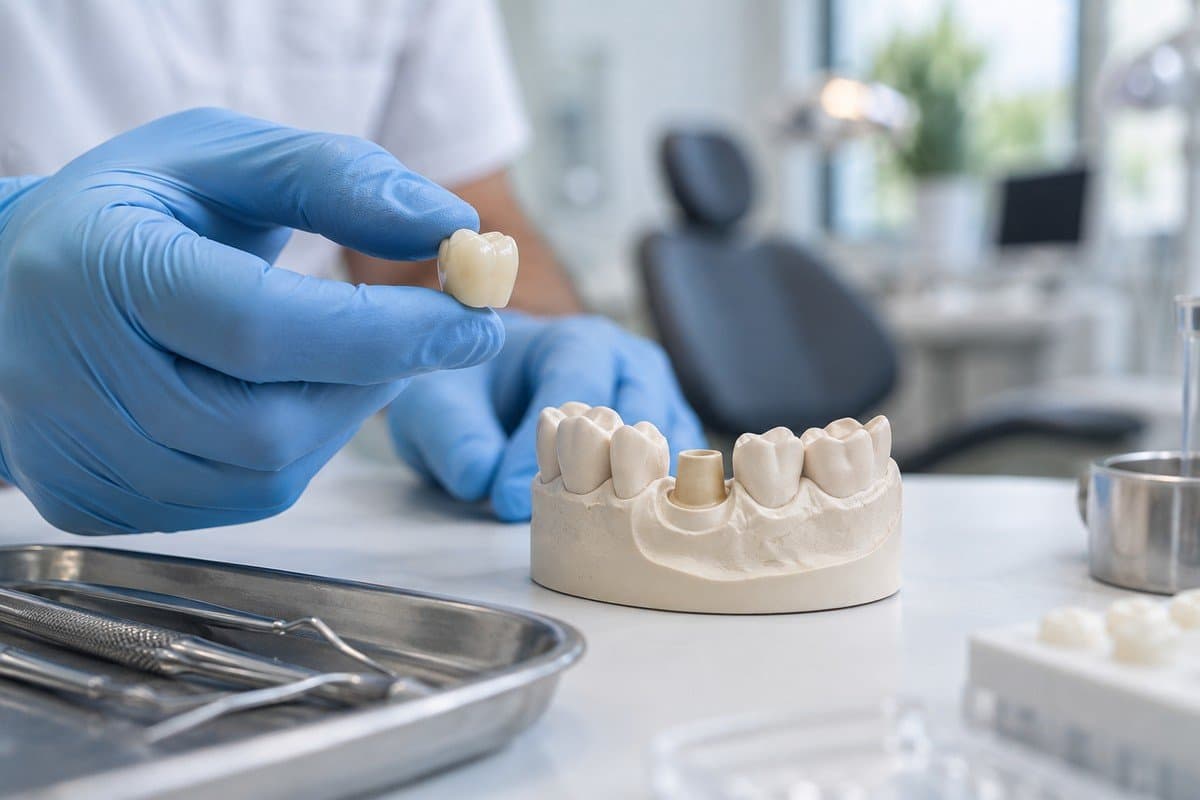
A temporary tooth can provide support for appearance, speech, and chewing while you wait for treatment to be completed. Which type is used and how long it stays depends on the condition of the tooth and the treatment plan.
This article covers the purpose of a temporary tooth, how long it is used, how to care for it, and what to do if a problem comes up. When a temporary tooth is planned, the Dental Prime dentists evaluate the method and the check-up interval according to the examination findings; the information here does not replace a personal examination.
Purpose of a Temporary Tooth and When It Is Used
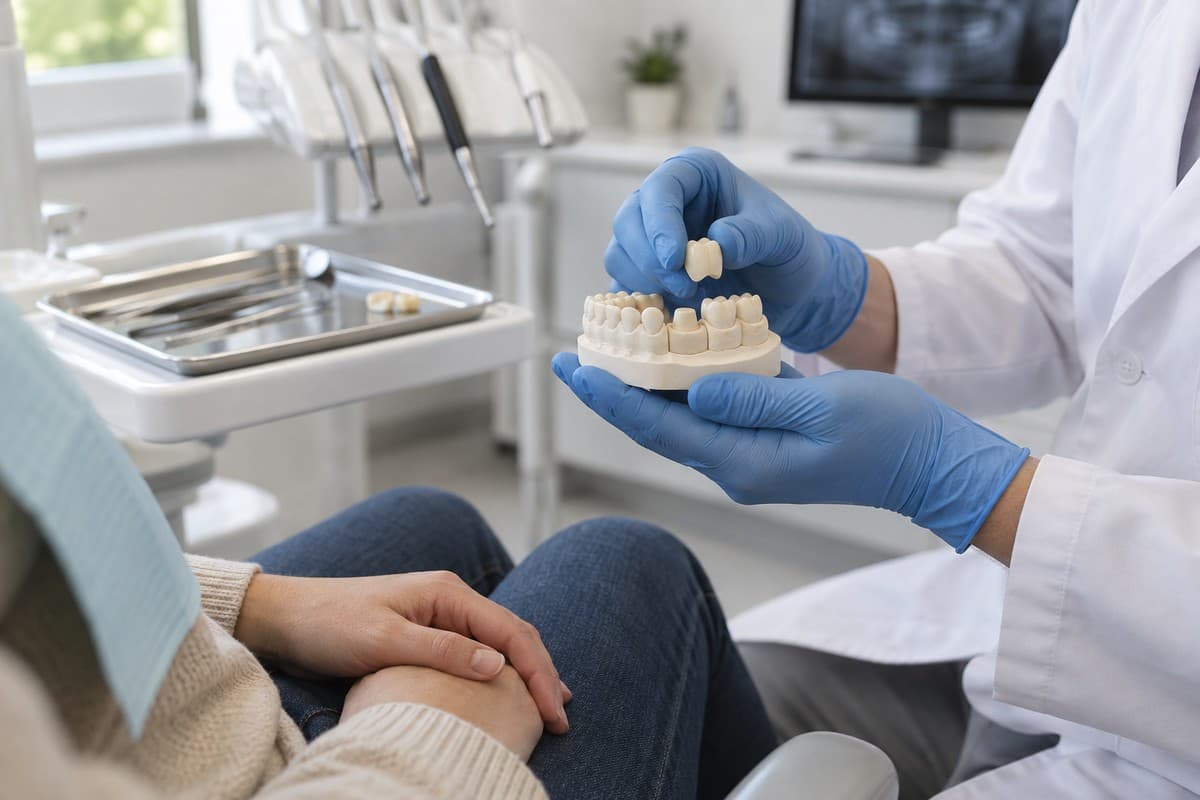
A temporary tooth can cover a tooth that has been prepared for a crown or bridge, or it can temporarily fill the area of a missing tooth until the permanent prosthesis is completed. It does not come in a single form: a temporary crown placed on a tooth, a temporary bridge, and a removable temporary prosthesis each meet different needs.
The main goal is to get through the interim period of treatment more comfortably. Reducing contact between the prepared tooth and outside factors, helping to preserve the shape of the gum around it, and supporting appearance, especially in the front region, are among these goals. The presence of a temporary restoration does not mean that the tooth underneath or the implant area has fully healed.
Which temporary is suitable is not determined solely by the number of missing teeth. The neighboring teeth that can provide support, the visibility of the treatment area, the bite pattern, and cleaning habits are also evaluated. This makes it possible to plan a balance between the benefit expected during the interim period and the load placed on the temporary piece.
The Role of a Temporary Tooth in Crown Treatment
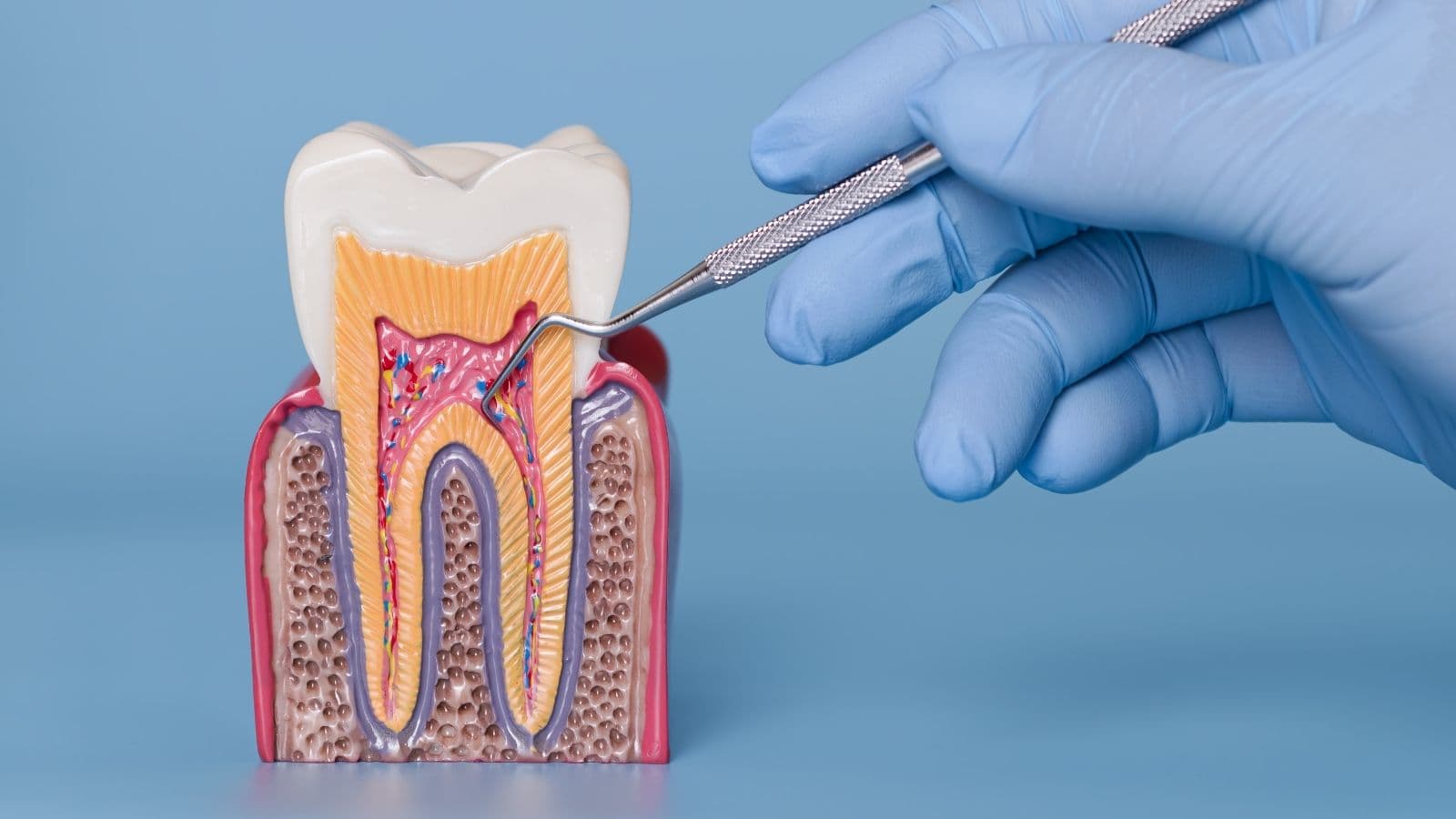
After a tooth has been prepared for a permanent crown, a temporary crown may be placed in the meantime if a laboratory stage is required. This crown covers the exposed tooth surface; it may help reduce sensitivity that can occur with heat, cold, and touch. It also plays a role in preserving the position of the teeth and the shape of the gum margin.
The marginal fit and bite of the temporary crown are important. If you feel an early contact when biting, catching, or pressure on the gum, your dentist can make a small adjustment. For this reason, it is not appropriate to use a temporary in a way that causes discomfort on the grounds that it will only be there for a short time. You can also read more about zirconia crowns in Samsun, one of the crown options.
The color and surface texture of a temporary crown may look different from the permanent crown. The priority here is to protect the tooth while maintaining the impression and fit needed for the permanent piece. If the appearance bothers you, especially on front teeth, mention it at your check-up; an appropriate adjustment can be made to the temporary piece as well.
Using a Temporary Tooth in Implant Treatment
In implant treatment, a temporary tooth can be used to support the appearance of the missing tooth and some everyday functions. However, how much load the implant can carry during the period when it is healing with the bone varies from person to person. For this reason, a temporary tooth is not placed at the same time or in the same way for every patient.
In the front tooth region, appearance may be a bigger concern; in the back region, the chewing load plan comes to the fore. Your dentist evaluates these two requirements together. In some patients it is possible to temporarily close the gap during healing, while in others an option that does not touch the area is needed.
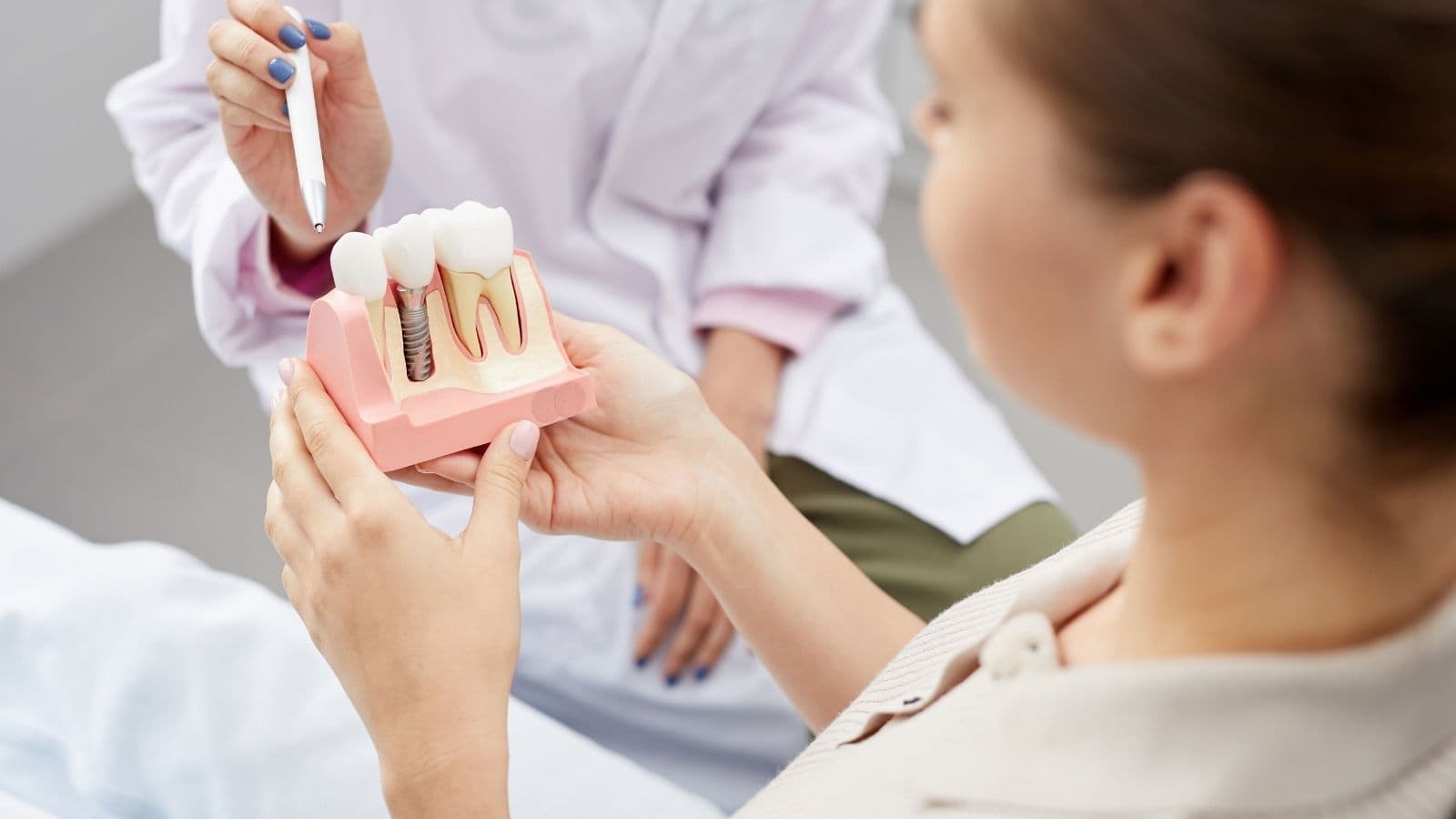
In some plans a temporary crown is placed on the implant, while in others a bridge or a removable temporary prosthesis that takes support from the neighboring teeth is preferred. It is especially important that too much chewing force does not unintentionally fall on a newly placed implant. Having a temporary tooth placed does not mean that the implant is ready for permanent loading. The general stages of implant placement are explained in our dental implant treatment in Samsun content.
How Long a Temporary Tooth Is Used
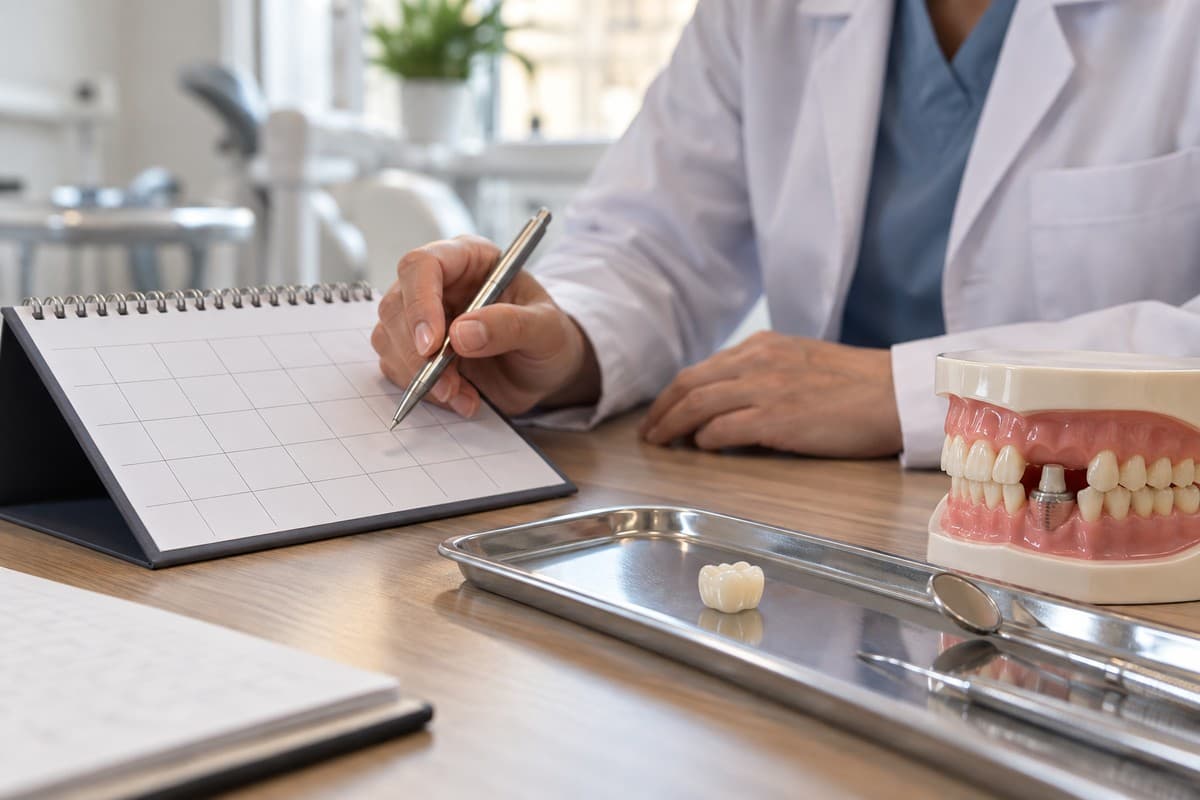
How long is a temporary tooth used? There is no single standard duration. While a crown or bridge is being prepared, most temporary restorations are used for anywhere from a few days to a few weeks. In implant treatment, because healing and preparation of the permanent superstructure take longer, a temporary solution may be needed for months.
These durations do not replace your personal treatment schedule. Your dentist chooses the material of the temporary, the way it is cemented, and the check-up interval according to the expected duration. If an appointment is postponed, the condition of the temporary tooth needs to be re-evaluated; deciding on your own that it will hold up a while longer is not the right approach.
When estimating the duration, it is not enough to look only at whether the piece looks sturdy in the mouth. The gum, the prepared tooth surface, and the bite are also monitored. For example, even if the temporary crown stays in place, developing sensitivity underneath or food getting trapped may require a check-up. The end date given by your dentist and the interim check-ups should be considered together.
Factors That Affect How Long It Is Used
The type of treatment is the first determining factor. Preparing a single crown and waiting for an implant to heal with the bone do not follow the same timeline. The condition of the gum tissue, the impression or laboratory stages, additional procedures, and check-up appointments can also change the schedule.
The material the temporary is made of, its location in the mouth, and the chewing force it is exposed to are also important. Habits such as clenching the teeth, biting down on hard foods, or continuing to use a temporary that has come loose may require repair before the planned time. If long-term use of a temporary is needed, your dentist makes a suitable design and follow-up plan.
When it comes to an implant, the course of bone and gum healing is the deciding factor. Having a visible temporary tooth in place does not mean that you can bite on that area with normal force. At the check-up, the condition of the implant and the surrounding tissues is evaluated; the time to move to the permanent superstructure is clarified accordingly.
Risks of Using a Temporary Tooth Longer Than Recommended
Temporary material and cement are generally not chosen for long-term use in the way a permanent restoration is. Over time, wear, fracture, or gaps along the margins may occur. This can set the stage for food buildup, gum irritation, or sensitivity in the prepared tooth.
If a temporary crown comes off, exposure of the tooth can increase pain and heat-cold sensitivity. Changes in the neighboring teeth or gum can also make it harder for the permanent piece to fit when it is placed later. It cannot be said that every long use will definitely cause a problem; the risk is evaluated according to the examination and the check-up interval.
Telling your dentist when an appointment changes gives you the opportunity to discuss how much longer the temporary can be used safely. If necessary, the piece is re-cemented, adjusted, or replaced. A check-up like this may reduce the likelihood of running into unexpected fit problems on the day of the permanent treatment.
Eating and Daily Life With a Temporary Tooth

You can eat with a temporary tooth; still, you need to follow the specific instructions your dentist gives on the first day and afterward. When you can eat after cementation may vary depending on the material used. If numbness persists, it is safer to postpone eating so that you do not bite your lip, cheek, or tongue.
Not cracking hard-shelled foods with the temporary tooth, taking small bites, and chewing on the other side if possible can reduce the risk of the temporary coming off. Sticky candy, gum, and hard nuts can especially challenge the retention of a temporary crown. If there is a temporary tooth on an implant, the chewing restrictions may be more specific; the loading instructions given by your dentist take priority.
Starting with warm foods that are easy to chew may be more comfortable for most people. Very hot or very cold foods can make temporary sensitivity more noticeable in a prepared tooth. If discomfort appears only briefly with a certain food, make a note of it; if it keeps increasing or starts on its own, talk to your dentist.
A temporary tooth in the front region may feel strange at first when speaking. As the tongue and lips get used to the new surface, this feeling decreases for most people. If there is a lasting lisp, a noticeable change in the bite, or a feeling of catching on the tooth, it is appropriate to ask for a check-up. Small appearance-related adjustments can also be communicated to your dentist while the permanent tooth is being prepared.
If you play sports with a temporary tooth or you have a habit of clenching your teeth at night, tell your dentist. If you use a protective appliance, its fit may need to be checked again after the temporary piece is placed. Avoid frequently probing the temporary with your finger, as this can increase the feeling of looseness.
Cleaning and Caring for a Temporary Tooth
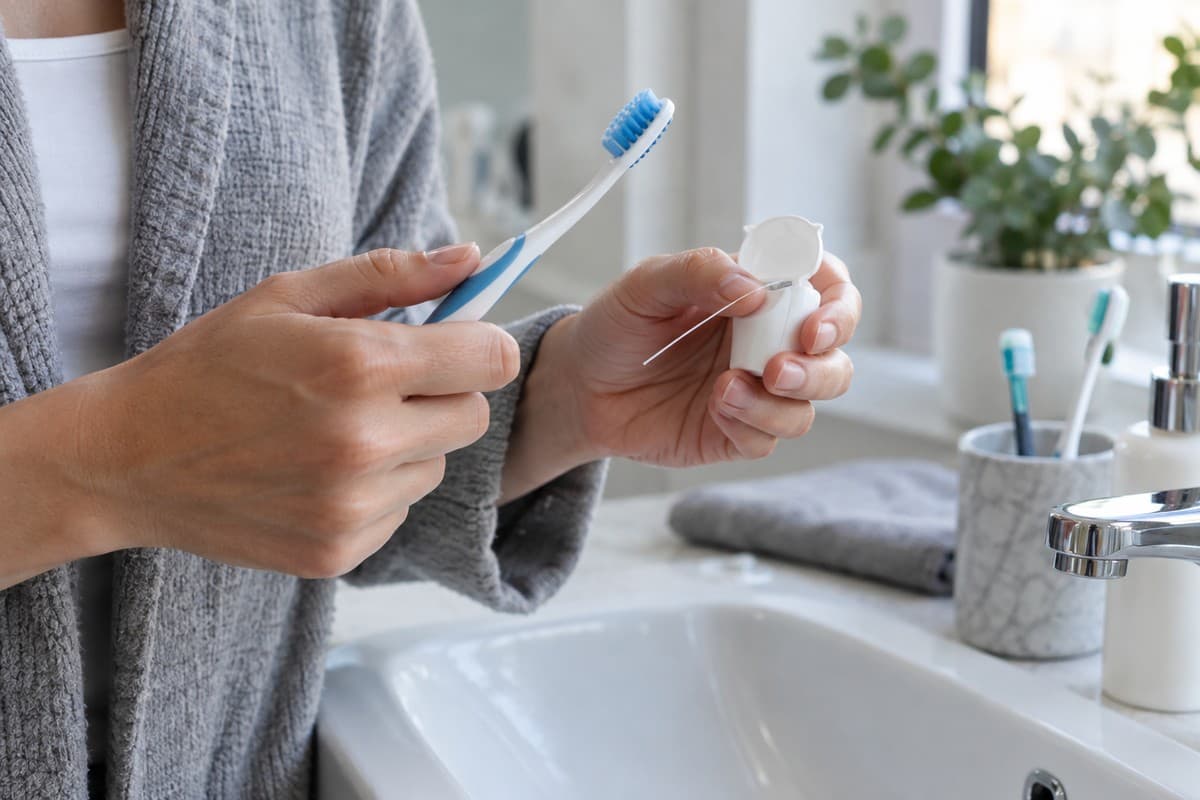
The gum around the temporary tooth and the neighboring teeth should be cleaned every day. Brushing gently with a soft-bristled brush helps reduce plaque buildup around the temporary crown. Stopping brushing altogether does not solve the concern about sensitivity; it can increase gum problems.
When using dental floss, there is a chance it may catch on the edge of the temporary crown. If your dentist has recommended it, carefully placing the floss between the teeth and sliding it out to the side rather than pulling it upward can help avoid putting force on the temporary. Cleaning removable temporary prostheses is different; the instructions given for removing, cleaning, and storing them should be followed.
Mouthwash or interdental brushes are not recommended in the same way for everyone. Do not try to fix an area that bleeds, swells, or smells bad simply by brushing harder. Especially while the tissue around an implant is healing, a check-up by your dentist may be needed. An evaluation at a dental clinic in Samsun for regular care and check-ups can clarify the method that suits you.
If you notice food collecting at the edge of the temporary tooth, clean the area gently and mention the problem at your check-up. Constant food trapping may not be related only to brushing technique; the marginal fit of the temporary or its contact with the neighboring tooth should also be examined. While cleaning, avoid applying force that could move the piece.
Unless your dentist has given a specific recommendation, do not neglect your general oral care: brush your teeth twice a day and clean between the teeth with a suitable tool. If there is heavy bleeding or pain around the temporary, instead of stopping cleaning entirely, ask your dentist for a method suited to the area.
Pain, Sensitivity, or Fracture of a Temporary Tooth
Mild, short-lived sensitivity may be seen after the procedure. On the other hand, pain that keeps increasing, an ache that wakes you at night, noticeable pain when chewing, or swelling in the gum requires evaluation. A temporary tooth that sits too high can also cause pain when biting; the bite is checked at the examination.
If the temporary tooth fractures, cracks, or comes loose, do not force the piece back into place. Keep the piece that has come off in a clean container and contact the dentist carrying out the treatment as soon as possible. Do not use household adhesive; these products are not suitable for the mouth and can make the next procedure more difficult.
If a sharp edge irritates your cheek or tongue, avoid chewing on that side. In case of severe pain, noticeable swelling, fever, bleeding that does not stop, or suspicion that the piece has gone into the airway, urgent medical evaluation should be sought without delay. When a temporary tooth comes off, it is more appropriate to plan an interim check-up rather than wait for the permanent appointment.
When describing the problem, stating when the temporary was placed, when it became loose, and in what situation the pain appears makes the examination easier. A photo of the tooth can help explain the situation; still, a photo does not replace an examination. Especially in the case of swelling or persistent pain, a decision should not be made remotely by looking only at an image.
Differences Between a Temporary Tooth and a Permanent Tooth
The main difference between a temporary and a permanent tooth is the intended purpose of use. A temporary restoration is made to manage the interim period, while a permanent restoration is prepared according to the examination and measurements with the goal of long-term use. The suitability of both depends on the tissues in the mouth, the bite, and cleaning conditions.
Feature | Temporary tooth | Permanent tooth |
|---|---|---|
Purpose | Protection and functional support until treatment is completed | Planned long-term function and appearance |
Material and retention | Chosen according to the duration; often easier to remove | Chosen according to the final plan; permanent fixation is the goal |
Durability | Can be damaged more easily by hard and sticky foods | Designed for daily chewing with proper care |
Fit check | Monitored throughout the interim period and adjusted if necessary | Evaluated in detail before and after placement |
After the permanent tooth is placed, brushing, interdental cleaning, and check-ups are still needed. The word "permanent" does not mean that no care will be needed for a lifetime. It is helpful to share any color, shape, or bite problems noticed during the temporary tooth period before the permanent restoration is applied.
The temporary piece is often not a trial that shows the final appearance exactly. Still, it can give an idea about the length of the tooth, its effect on speech, and the overall look of the smile. These observations are concrete feedback to share with your dentist when preparing the permanent restoration.
Conclusion
What is a temporary tooth? It is an interim restoration that helps protect the tooth or the area of a missing tooth and maintain daily function until the permanent treatment is completed. The duration of use differs between crown and implant treatment; the exact schedule is determined by the examination and the treatment plan.
It is important to keep the temporary tooth clean, to be careful with hard and sticky foods, and to report looseness, fracture, or increasing pain without delay. Keeping the scheduled check-up appointment for the transition to the permanent restoration allows both the temporary piece and the underlying tissues to be evaluated.