Spec. Dt. Gökcan ErtaşOrthodontist
 Dt. Sena KırcaDentist
 Dt. Sevinç Cansu KayıranDentist
 Assoc. Prof. Dr. Sezin ÖzerPediatric Dentist
 Spec. Dt. Sude Yıldırım BolatSpecialist in Periodontology
This distinction is not merely a theoretical detail; which type of discoloration you are facing directly determines the method to be used. A stain on the enamel surface and a color change in the dentin tissue are not handled with the same approach, and a method that works for one may not give the expected result for the other.
In this guide, we cover why teeth turn yellow, how internal and external discoloration are told apart, ways to preserve tooth color, and the available whitening options. The only method that definitively determines the type of discoloration is a dental examination; the information in this article is for informational purposes and does not replace an examination.
Choosing the right method begins with the right diagnosis. The dentists at Dental Prime determine the source of the discoloration through examination and, when necessary, radiographic evaluation, and create a plan suited to the individual.
Why Do Teeth Turn Yellow?
The darkening of tooth color over time occurs in most people as a result of several factors coming together. Some of these factors are natural and unavoidable, while others are directly related to daily habits. Telling the two apart is important for seeing at what point intervention is possible.
Changes in Tooth Structure During Natural Aging
Enamel, the outermost layer of the tooth, is a translucent and naturally whitish structure. Just beneath this layer lies the dentin tissue, which is yellowish in tone. The visible color of the tooth is actually the combined result of these two layers.
Over the years, the enamel layer gradually thins through chewing, brushing and the effect of acids. As the enamel thins, the dentin beneath it becomes more visible and the tooth begins to be perceived as naturally more yellow.
In parallel, the dentin tissue also tends to thicken and darken with age. In other words, yellowing most often arises not from something outside sticking to the tooth, but from a change in the tooth's own balance of layers.
Genetic makeup also plays a decisive role in this picture. In some people, the enamel is naturally thinner or more translucent; in these people, the teeth may look yellow at an earlier age even with no unfavorable habits.
For this reason, there is no single definition of natural tooth color that applies to everyone. The bright white tone seen in advertisements is often beyond the limits of natural tooth color; the natural color of a healthy tooth is, in most people, a light cream or ivory tone.
Smoking, Poor Oral Hygiene and Other External Factors
Cigarettes and tobacco products are among the leading factors that affect tooth color most quickly and most noticeably. The tar and nicotine they contain settle into the microscopic pores on the enamel surface and over time leave a lasting, nearly brown color.
Drinks containing intense pigments, such as tea, coffee, cola and red wine, create a similar effect. The deciding factor here is frequency more than quantity; a drink sipped at intervals throughout the day exposes the tooth surface to pigment for much longer than one drunk all at once.
Inadequate oral hygiene accelerates this process. Plaque that builds up on surfaces that are not cleaned regularly both forms a colored layer itself and makes it easier for pigments from outside to adhere to the tooth.
Plaque that hardens over time into tartar can no longer be removed by brushing. At this stage, discoloration stops being a problem of an uncleaned surface and turns into a condition that requires professional intervention.
What Is External Discoloration and How Does It Occur?

External discoloration is called extrinsic staining in dentistry and, as the name suggests, occurs on the outer surface of the tooth, that is, in the enamel layer. Here the color change has not penetrated the structure of the tooth; it involves a layer attached to the surface.
Although enamel looks smooth to the naked eye, it has a porous structure at the microscopic level. Pigment molecules from tea, coffee, cigarettes and foods containing coloring agents gradually settle into these pores over time and create a progressively darkening appearance on the surface.
The most obvious feature of external discoloration is that it is usually concentrated in particular areas of the teeth. Buildup is greater in areas the brush cannot fully reach, such as the back surfaces of the teeth, areas near the gums and the spaces between the teeth.
These kinds of stains have an important advantage: with the right approach, they can be reversed to a large extent. The buildup on the tooth surface can be removed with professional cleaning and polishing performed in the clinic.
At this point, scaling (tartar removal) is the first step in most cases. When the hard buildup on the surface is cleaned, the true color of the tooth is revealed, and in many people no additional whitening is needed after this stage.
Another feature of external discoloration is that the buildup hardens over time and changes its structure. While a newly formed surface stain can be partially lightened by regular brushing, a buildup that has mineralized over months can only be removed in the clinic.
What Is Internal Discoloration and How Does It Occur?
Internal discoloration is referred to as intrinsic staining in the medical literature and occurs not on the surface of the tooth but within the enamel layer or in the dentin tissue beneath it. Here the color change has become part of the structure of the tooth.
One of the best-known causes is tetracycline-group antibiotics used during the period of tooth development. These drugs bind to calcium in the tooth tissue and settle into the enamel and dentin structure; as a result, a permanent color change that looks gray, brown or banded appears.
Dental trauma is also a frequent cause. When the vascular structure inside the tooth is damaged after a blow, the exposed blood components can penetrate the dentin tissue and cause the tooth to darken over time.
Fluorosis caused by excessive fluoride intake during the developmental period, color change that develops over time in teeth that have had root canal treatment, and some developmental enamel disorders also fall into this group. The common point is that the discoloration lies within the tissue rather than on the outer surface.
This structural difference directly determines the treatment approach. Cleaning methods that target the surface do not work on internal discoloration; in these cases, the dentist considers a different plan depending on the condition of the tooth.
Managing expectations is of particular importance in internal discoloration. The lightening that can be achieved in this type of discoloration is generally more limited than in external discoloration, and the treatment time can be much longer; in some cases, a different method comes into play.
Ways to Tell External and Internal Discoloration Apart
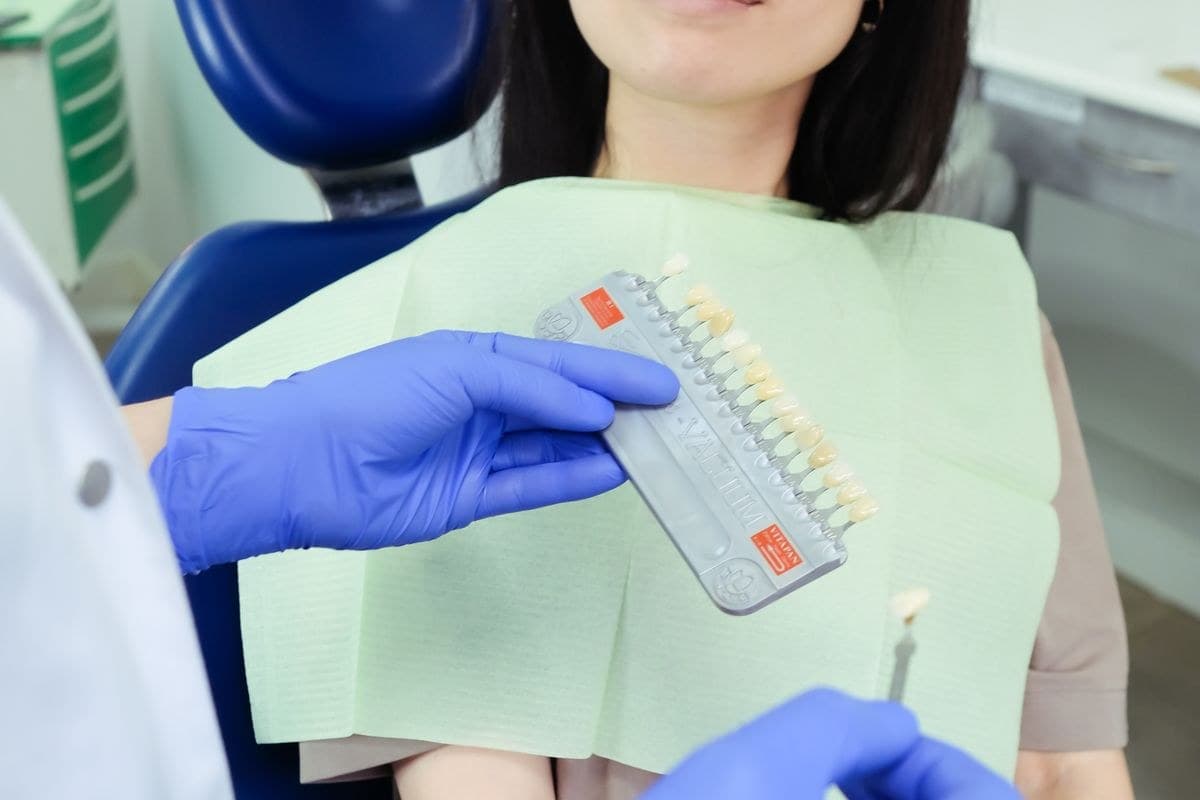
Understanding the difference between the two types of discoloration is important for setting expectations on a realistic footing. The table below summarizes the basic distinction; however, the definitive distinction can only be made with a clinical examination.
Criterion | External Discoloration | Internal Discoloration |
|---|---|---|
Location | Enamel surface | Inside the enamel and dentin |
Typical causes | Tea, coffee, cigarettes, plaque buildup | Tetracycline, trauma, fluorosis, root canal treatment |
Distribution | Localized, concentrated in areas the brush cannot reach | Usually uniform across the whole tooth or in a single tooth |
Color tone | Yellow, brown, dark buildup in places | Gray, brown, banded or dull |
Approach | Professional cleaning and polishing | Advanced methods with a dentist's evaluation |
Even Distribution of Discoloration Across All Teeth
The most practical observation that can be made at home is to look at the distribution of the color change. If the discoloration is concentrated in particular areas and appears to have built up near the gums or between the teeth, this generally points to an external cause.
On the other hand, if the color change is spread evenly across the whole tooth and does not lighten at all with brushing, the likelihood of internal discoloration is higher. Similarly, a single tooth being markedly darker than the others often points to an internal cause specific to that tooth.
Another clue is timing. General yellowing that progresses slowly over the years is mostly related to aging and external factors, whereas a color change that begins after a blow or a treatment tends to be of internal origin.
Although these observations are a guide, they are not diagnostic. Mixed pictures in which the two types of discoloration are present together are quite common, and this only comes to light through clinical evaluation.
The Importance of a Professional Dental Examination
In addition to determining the source of the discoloration, a dental examination also reveals whether there is another underlying problem. Some color changes can be the first sign of conditions that require treatment, such as decay or marginal leakage from an old filling.
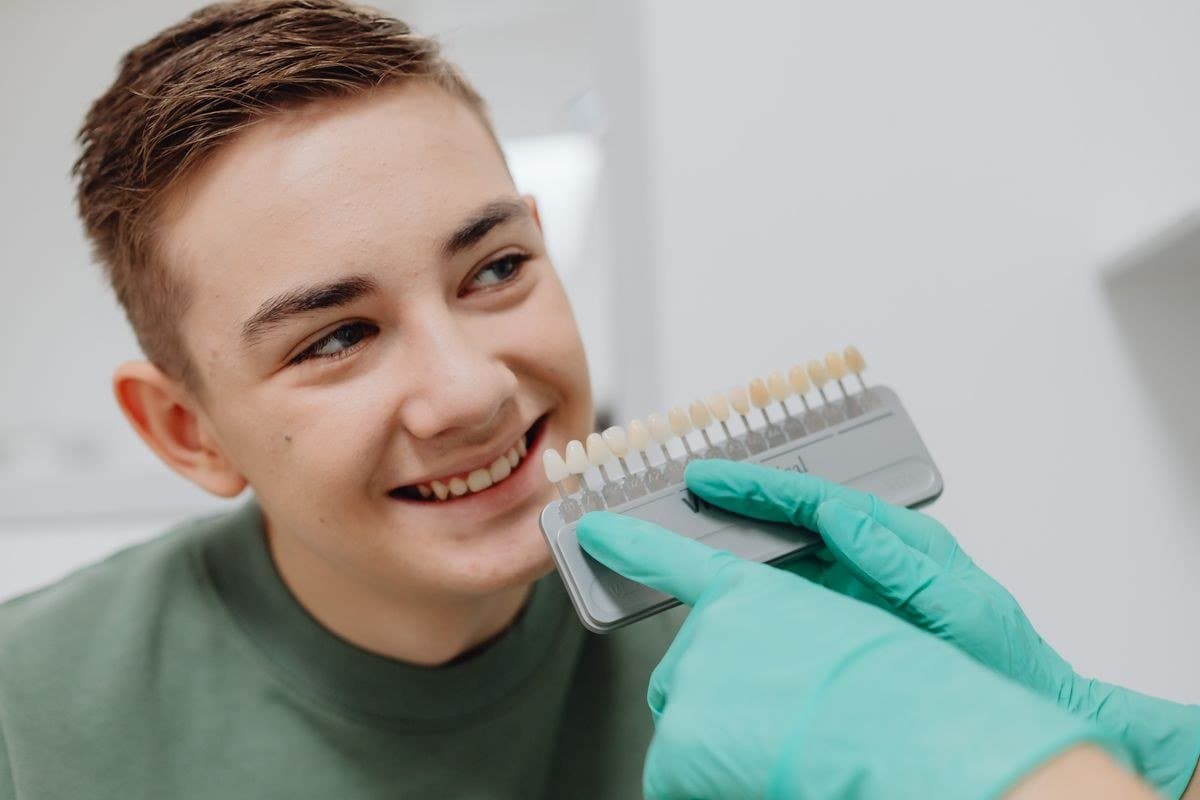
During the evaluation, the tooth's current color is recorded with standard shade guides and, when necessary, the internal structure of the tooth is examined with radiography. This step also makes it possible to objectively compare the change achieved after treatment.
The examination is also decisive for managing expectations. What level of change can be expected with which method depends on the structure of the tooth and the type of discoloration; this information can only be clearly shared after an examination.
In addition, whitening may not be suitable for every mouth. In cases such as active decay, gum inflammation, excessive sensitivity, or the presence of extensive fillings and crowns, the dentist may recommend a different sequence; for this reason, the pre-treatment evaluation should not be skipped.
Ways to Preserve Tooth Color and Slow Yellowing
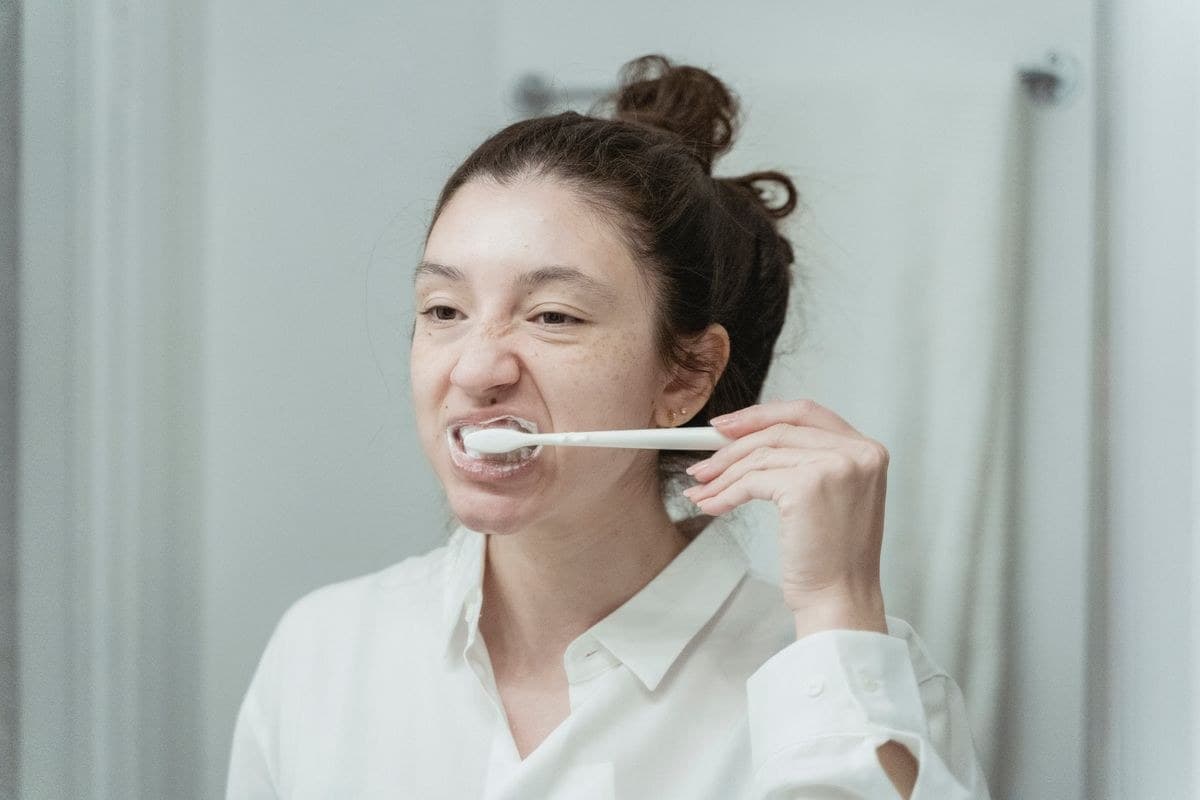
Preserving tooth color is less about a one-time treatment than about the sum of daily habits. The headings below include practical steps that help both preserve the current color and slow yellowing.
Daily Oral Hygiene and Toothbrushing Techniques
Regular brushing twice a day for two minutes each time is the most basic way to prevent pigment buildup on the surface. The technique of brushing matters as much as its duration; instead of hard, horizontal movements, soft circular movements from the gum toward the tooth should be preferred.
Contrary to what is believed, a hard-bristled brush and excessive pressure do not make the teeth whiter. On the contrary, they wear away the enamel surface over time, causing the dentin beneath to show more, and can accelerate yellowing in the long term.
Using floss or an interdental brush is also a step neglected by most people. The surfaces between the teeth make up an important part of the total tooth surface, and because the brush does not reach them, discoloration most often begins in these areas first.
Most toothpastes marketed as whitening do not whiten chemically but clean the surface with abrasive particles. Since constant and uncontrolled use of these products can cause enamel wear, the choice should be made on the dentist's advice.
Drinking Water After Staining Foods and Drinks
Drinking a glass of water right after consuming tea, coffee or red wine is a simple but effective habit that keeps pigments from staying on the tooth surface for long. Water both dilutes the pigment and helps the acid balance of the oral environment return to normal more quickly.
Brushing immediately after acidic or staining drinks is not recommended. Enamel that is temporarily softened by acid wears away more easily when brushed at this stage; waiting about half an hour before brushing is safer.
Drinking beverages such as iced coffee or iced tea through a straw is also a practical way to reduce the contact surface. This approach can make a difference especially for people who drink such beverages often during the day.
The Habit of Using a Water Flosser
A water flosser is a supplementary cleaning device that removes food residue between the teeth and along the gum margin with a pressurized stream of water. It makes cleaning noticeably easier especially for people who wear braces, bridges or implant-supported prostheses.
There is an important distinction here: a water flosser does not replace the toothbrush and dental floss. Brushing is still the most effective method for mechanically lifting the plaque layer from the surface; the water flosser is a step that complements this routine.
The pressure setting of the device also requires attention. Because using it at high pressure and aimed directly at the gums can irritate the gum tissue, it is appropriate to start at a low setting and to use it in line with the dentist's advice.
Scaling and Professional Dental Visits
Once plaque hardens into tartar, it cannot be removed by any method applied at home. At this stage, the only solution is professional cleaning performed in the clinic with appropriate instruments.
Tartar is also not merely an aesthetic problem; when it builds up along the gum margin, it sets the stage for inflammation and, over time, gum recession. In other words, regular cleaning is a step aimed at protecting both color and gum health.
The general recommendation is a check-up examination every six months. In people who smoke or consume a lot of tea and coffee during the day, this interval may be kept shorter on the dentist's evaluation.
Another benefit of check-ups is that problems are noticed while they are still small. A cavity or gum problem detected at an early stage can be solved before it turns into a much more extensive treatment later.
It is known that after professional cleaning the teeth are more open to pigment for a short time. For this reason, staying away from staining factors such as tea, coffee and cigarettes on the first day after the procedure helps preserve the result achieved.
Benefits of Quitting Smoking and Reducing Consumption of Staining Foods
Quitting smoking is the single step that makes the most noticeable difference in tooth color. New discoloration stops forming, and when existing buildup is removed with professional cleaning, the result is much more lasting.
Its benefit is not limited to aesthetics. Smoking is a known risk factor that speeds the progression of gum disease and weakens response to treatment; quitting benefits oral health as a whole.
With staining foods, on the other hand, it is not necessary to give them up completely. Reducing how often they are consumed, drinking water afterward and keeping up regular cleaning is enough for most people to maintain the balance.
Regular check-ups at a dental clinic in Samsun make it possible to see the effect of these habits on the teeth in good time and, if needed, to intervene early.
Types of Whitening Treatments and Expected Results
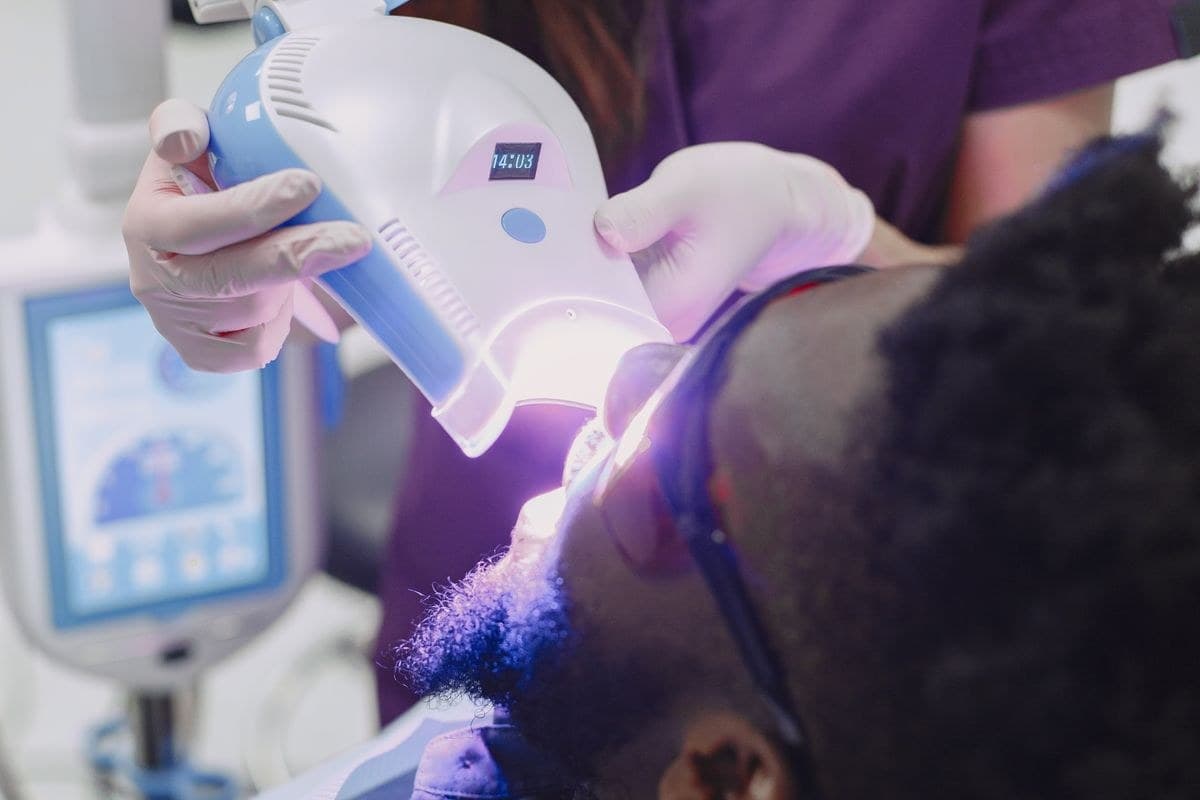
All whitening methods rely on a similar chemical basis: hydrogen peroxide or carbamide peroxide penetrates the enamel and breaks down the molecules that give color. The differences between methods are the concentration used, the duration of application and the level of dental supervision.
The expected result varies from person to person. The tooth's current color, enamel thickness and the type of discoloration are the main factors that determine the limits of the change that can be achieved.
At-Home Whitening Products and Their Limitations
Whitening strips, pens and toothpastes sold in stores and online contain low concentrations of active ingredients. These products may provide limited lightening in mild surface discoloration, but do not give a noticeable result in advanced discoloration.
The main risk is using these products without a dentist's evaluation. If there is an unnoticed cavity or gum problem underneath, the treatment both remains ineffective and can worsen the existing condition.
With standard tray-based at-home kits, the gel can spill onto the gum tissue because of a tray that does not fit the teeth properly. This is a common problem that leads to temporary irritation and sensitivity.
Methods circulating on the internet, such as baking soda, lemon juice or vinegar, are practices that should especially be avoided. These substances do not whiten teeth; with their acidic and abrasive effects, they thin the enamel and increase yellowing in the long term.
Why Is Professional Dental Whitening More Effective?
Whitening performed in the clinic relies both on using a higher concentration of active ingredient and on applying this substance in a controlled way only to the tooth surface. Because the gums are isolated with protective barriers, the risk of irritation is markedly reduced.
The process begins with an examination; any cavities and gum problems are resolved first, and then professional cleaning is performed. This preparation stage ensures that the result is both more noticeable and more uniform.
Among the teeth whitening methods applied under a dentist's supervision are in-clinic treatments and at-home systems using custom-made trays. Which method is suitable is decided by the dentist according to the condition of the tooth and the desired result.
Temporary sensitivity that can last a few days may be seen after treatment; this is an expected response and usually resolves on its own. The durability of the result depends largely on habits in the following period.
Another important point is that whitening works only on natural tooth tissue. The color of existing fillings, crowns and porcelain surfaces is not affected by the procedure; for this reason, in people who have restorations in a visible area, the order of treatment should be planned with the dentist beforehand.
Veneer Options for Internal Discoloration
In advanced internal discoloration such as tetracycline stains, developmental enamel disorders or darkening after trauma, whitening may not always be enough. In these cases, the dentist may consider aesthetic solutions that cover the front surface of the tooth.
In porcelain veneer treatments, thin layers of porcelain are bonded to the front surface of the tooth. In addition to the color problem, this method also makes it possible to address irregularities in shape and size at the same time.
In darkening of a single tooth that has had root canal treatment, a different path can be followed. Depending on the condition of the tooth, the dentist considers options such as internal bleaching to determine whether a result can be obtained without the need for a veneer.
Because veneer options are treatments with limited reversibility, it is important to discuss the alternatives in detail with the dentist at the decision stage. When applied with the right indication, they preserve their function and appearance for many years.
Conclusion
The answer to why teeth turn yellow over time falls into two parts: external stains that build up on the enamel surface and internal discoloration that has penetrated the structure of the tooth. The right method is determined by which picture you are facing.
Most external discoloration can be reversed with regular care and professional cleaning. In internal discoloration, keeping expectations realistic and choosing the appropriate method with a dentist's evaluation are decisive.
Daily hygiene, small adjustments in habits and a check-up every six months are the most sustainable way to preserve color. To be sure of the type of discoloration, the best step is to see a dentist before trying any treatment.